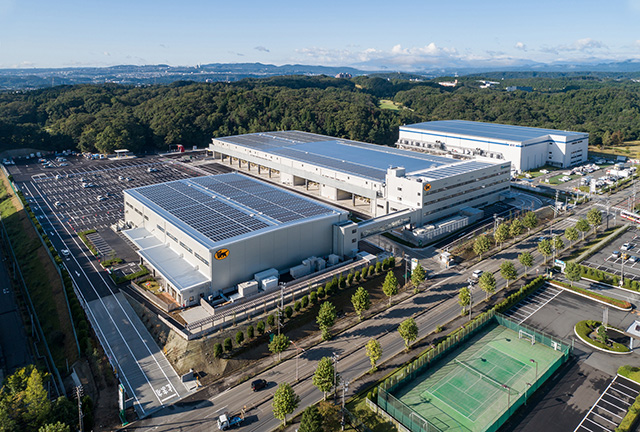
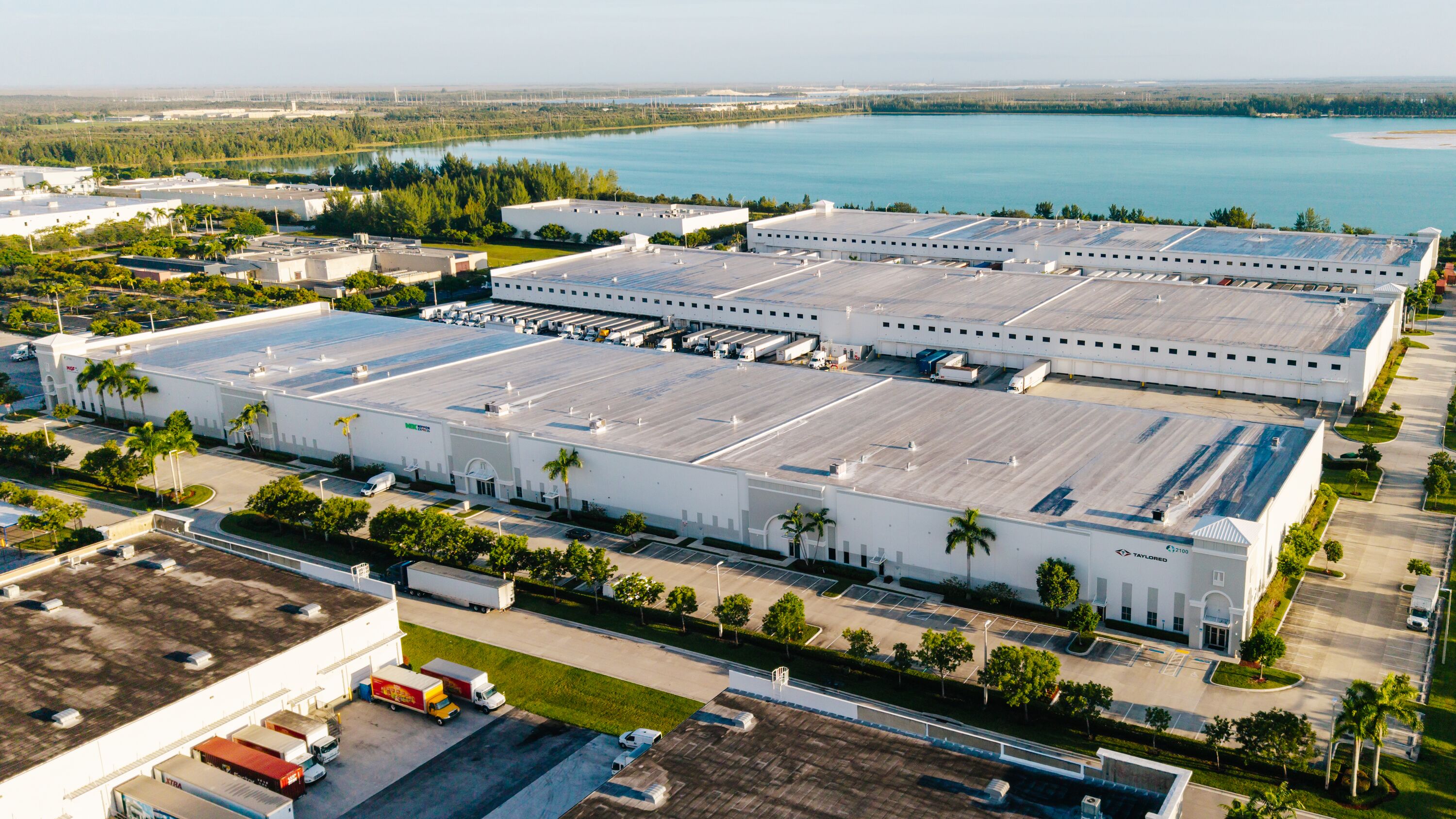
Exterior view of Prologis Commerce Center

U.S. Logistics Market Enters New Stage of Growth

Published on

Key Messages

  • Customers are in growth mode. U.S. net absorption reached 66 MSF in Q2, the strongest quarter since 2022, while the IBI Activity Index remained in expansionary range through the first half of 2026.
  • Near-term deliveries should fall short of demand in 2026, with expected absorption of 220 MSF exceeding 205 MSF of completions and large-format availability particularly limited.
  • U.S. rents grew 70 bps quarter-over-quarter in Q2 as availability tightened, making the need to plan early critical, especially for large well-located facilities.

Recovery broadens as customer demand strengthens

Several quarters of sustained demand improvement indicate that the logistics real estate market has moved into growth mode. U.S. net absorption reached a cyclical high after several quarters of outperformance of initial expectations. This momentum is forecast to continue through the remainder of 2026 and bring vacancy down by approximately 30 bps for the year. The IBI Activity Index supports this momentum, having remained in the high 50s through the first half of 2026. Together, these indicators show that customers are becoming more confident making long-term supply chain and expansion decisions.

Growth is expanding and diversifying

Demand is broadening across industries, size categories and locations. E-commerce and essential goods customers continue to provide a stable foundation, while advanced manufacturing is adding new sources of growth. Demand is particularly strong among companies supporting data center construction, defense and the reconfiguration of global supply chains. Cyclical sectors such as housing, autos, furnishings and appliances have yet to recover fully, providing additional potential upside as economic conditions improve. This broader customer base should make the recovery more durable and less reliant on any single industry. 

Utilization remains choppy as inventories stay lean

The IBI Utilization Rate was choppy in Q2, averaging 83% and ranging from 81.8% to 84.5%. This volatility contrasts with the sustained improvement in leasing and net absorption, and reflects continued caution around inventory management. Companies are rebuilding inventories selectively, with stocking concentrated in manufacturing and high-tech supply chains that have lifted volumes overall. Retail and wholesale inventories remain near historic lows relative to sales, with the inventory-to-sales ratio at 1.1 versus the expansionary norm of 1.2 to 1.3. While there were signs of an early peak season beginning in May, the duration and magnitude of restocking will reveal more about shipper sentiment in the coming months.

Prime logistics space is becoming increasingly scarce

Slowing completions and stronger absorption are beginning to reduce vacancy, particularly in prime locations. Bulk-space vacancy is 60 bps below the overall market rate, with little new large-format supply under construction. Bulk leasing activity is running 10%-15% above the 2025 average, suggesting that the most sought-after spaces will become increasingly scarce. Near-term supply should remain limited because market rents remain approximately 20% below replacement-cost rents and development costs remain elevated. With few existing large-format options, more customers are considering build-to-suit facilities tailored to their operational requirements.

Growing scarcity and higher construction costs will push up rents

U.S. rents grew 70 bps quarter-over-quarter in Q2 as availability tightened. Rent performance is converging across markets. Texas, the Southeast, the Midwest and the Bay Area are currently among the strongest markets. Over time, coastal markets could lead the next stage of rent growth as occupancy recovers, barriers to supply keep deliveries very limited and market rents move closer to replacement-cost levels.

Conclusion 

The U.S. logistics market has moved to a new stage of growth. Demand is broadening across industries, supported by e-commerce, essential goods, advanced manufacturing and the build-out of digital infrastructure. Near-term completions remain below expected absorption, setting the stage for fewer availabilities and stronger rent growth. Competition for space should intensify as economic conditions strengthen and currently subdued sectors return to growth. Customers planning future expansions should act early, particularly where large-format options are limited.

End Notes

  1. CBRE, JLL, Cushman & Wakefield, Colliers, CoStar, Prologis Research.

  2. CBRE, JLL, Cushman & Wakefield, Colliers, CoStar, Prologis Research.

  3. Prologis Research.

  4. CBRE, JLL, Cushman & Wakefield, Colliers, CoStar, Prologis Research.

  5. Prologis Research.

  6. Prologis Research.

  7. U.S. Census Bureau.

  8. CBRE, JLL, Cushman & Wakefield, Colliers, CoStar, Prologis Research.

  9. Prologis Research.

  10. Prologis Research.

Forward-Looking Statements

This material should not be construed as an offer to sell or the solicitation of an offer to buy any security. We are not soliciting any action based on this material. It is for the general information of customers of Prologis.

This report is based, in part, on public information that we consider reliable, but we do not represent that it is accurate or complete, and it should not be relied on as such. No representation is given with respect to the accuracy or completeness of the information herein. Opinions expressed are our current opinions as of the date appearing on this report only. Prologis disclaims any and all liability relating to this report, including, without limitation, any express or implied representations or warranties for statements or errors contained in, or omissions from, this report.

Any estimates, projections or predictions given in this report are intended to be forward-looking statements. Although we believe that the expectations in such forward-looking statements are reasonable, we can give no assurance that any forward-looking statements will prove to be correct. Such estimates are subject to actual known and unknown risks, uncertainties and other factors that could cause actual results to differ materially from those projected. These forward-looking statements speak only as of the date of this report. We expressly disclaim any obligation or undertaking to update or revise any forward-looking statement contained herein to reflect any change in our expectations or any change in circumstances upon which such statement is based.

No part of this material may be (i) copied, photocopied or duplicated in any form by any means or (ii) redistributed without the prior written consent of Prologis.

About Prologis Research

Prologis’ Research department studies fundamental and investment trends and Prologis’ customers’ needs to assist in identifying opportunities and avoiding risk across four continents. The team contributes to investment decisions and long-term strategic initiatives, in addition to publishing white papers and other research reports. Prologis publishes research on the market dynamics impacting Prologis’ customers’ businesses, including global supply chain issues and developments in the logistics and real estate industries. Prologis’ dedicated research team works collaboratively with all company departments to help guide Prologis’ market entry, expansion, acquisition and development strategies.

About Prologis

Prologis, Inc. is the global leader in logistics real estate with a focus on high-barrier, high-growth markets. At June 30, 2026, the company owned or had investments in, on a wholly owned basis or through co-investment ventures, properties and development projects expected to total approximately 1.3 billion square feet (122 million square meters) in 20 countries. Prologis leases modern logistics facilities to a diverse base of approximately 6,500 customers principally across two major categories: business-to-business and retail/online fulfillment.