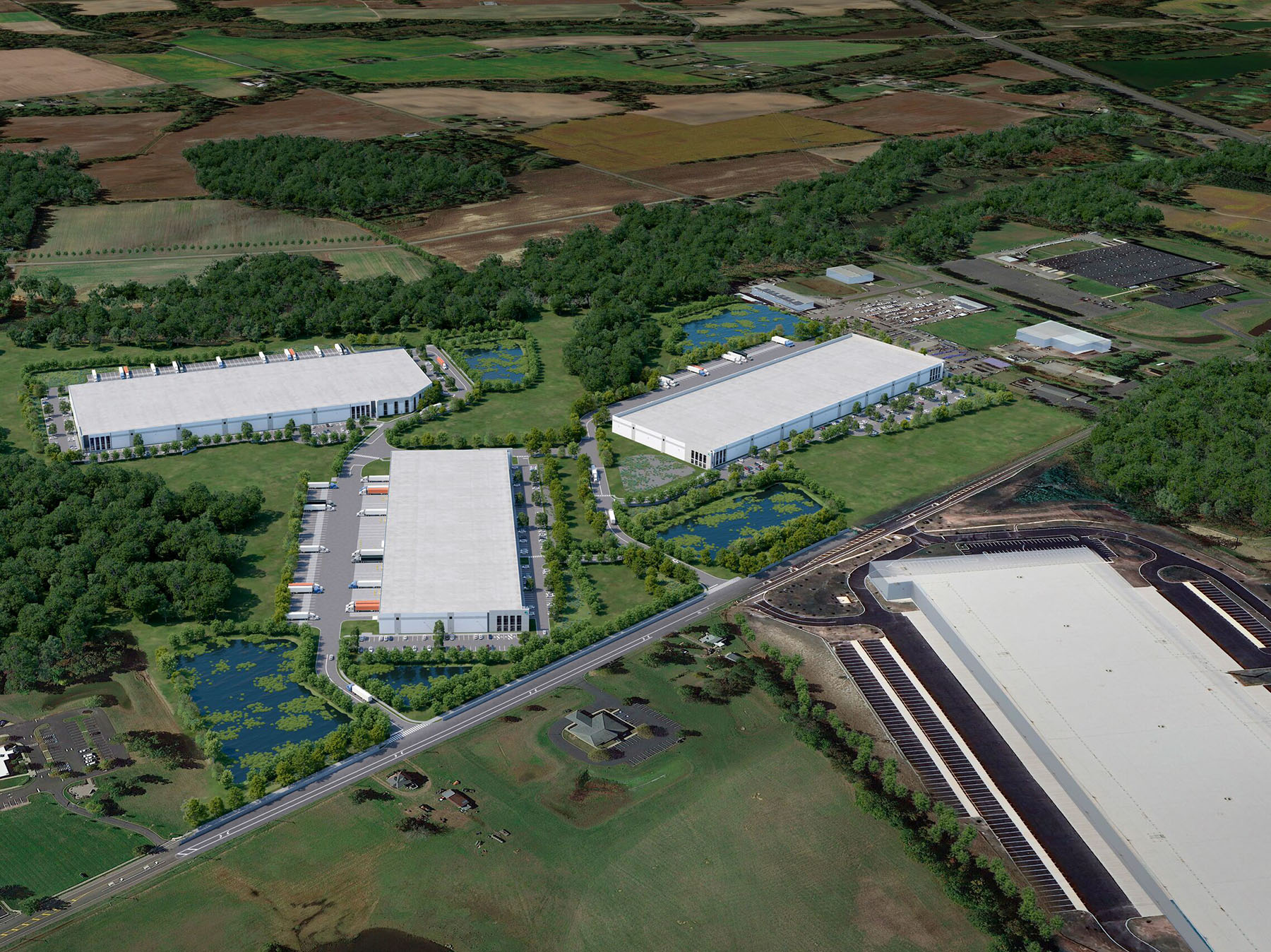
Aerial view of Prologis Beacon Lakes

Record Leasing and Falling Vacancy Reaffirms Turning Point

Published on

Key Messages

  1. The IBI Activity IndexTM increased to its highest level since November 2024 as goods moved through the supply chain more quickly in January. At the same time, the utilization rate remained steady around 85%. Together with slower imports, these readings indicate rapid inventory repositioning and replenishment.
  2. Demand for logistics space accelerated among a broader group of customers in Q4 and outpaced deliveries of new space. As a result, vacancies fell -10 bps to 7.4%, reflecting the emergent recovery that should progress through 2026. 
  3. Pricing power is beginning to rebalance as market rents inflect across multiple locations, priming rent growth to accelerate in 2026 as scarcity emerges in a broadening array of locations and size categories. 

Inventory Is Moving Downstream, Driving a Retailer-Led Activity Pickup 

The IBI Activity Index rose to 59.1 in January, driven by goods moving downstream through the supply chain as retailers replenished inventory. Utilization rates remained steady in the second half of 2025 and into January, hovering around 85%, just below the historical expansionary threshold as inventories remain historically lean. This utilization rate is up from an average of 84.5% in 2024, reflecting customers who have grown into their footprints over time. 

Leasing Activity Surged in 2H 2025, Pushing Vacancy Down

Net absorption outpaced new supply in Q4 2025, pushing vacancy down 10 bps quarter-over-quarter to 7.4%. Leasing activity increased in the second half of 2025, as customers moved off the sidelines to advance long-term growth strategies. With market fundamentals rebalancing, availability is expected to tighten over 2026. As a result, users evaluating space needs may face increased competition and reduced options in the next year. 

New Supply at Decade Low in 2026

Scarcity is emerging in select size categories across key markets as deliveries have fallen sharply in recent quarters. New deliveries totaled 50MSF in the U.S., while new development starts have fallen 71% from peak. Development economics continue to limit new speculative groundbreakings, with replacement cost rents roughly 20% above market rents in aggregate. As a result of resurgent demand, specialized needs and a lack of existing speculative space that fits the bill, build-to-suit construction starts were up 61% year-over-year in Q4 2025. 

Dynamics Point to Rising Rents Ahead

Pricing power is beginning to rebalance as market rents stabilize or grow across more markets each quarter. Following several quarters of broad-based declines, U.S. rents entered a period of relative stability as 78% of markets showed slower declines or faster rent growth. With vacancies falling and demand clearly in a higher gear, conditions are ripe for rent growth to accelerate in 2026. 

Conclusion: New Growth Cycle Ahead 

The U.S. logistics real estate market shifted materially by the end of 2025. Operational momentum stems from accelerating demand, with leasing volumes rebounding and customer requirements broadening into 2026. Limited speculative deliveries and faster lease execution is setting the stage for a new phase of competition for space as networks expand to meet growth and structural supply chain needs. Customers seeking to secure strategically located logistics real estate must act with urgency to stay ahead of this emerging supply-demand imbalance. 

End Notes

  1. Prologis Research.

  2. CBRE, JLL, Cushman & Wakefield, Colliers, CoStar, Prologis Research.

  3. Prologis Research.

  4. Prologis Research.

  5. CBRE, JLL, Cushman & Wakefield, Colliers, CoStar, Prologis Research.

  6. CBRE, JLL, Cushman & Wakefield, Colliers, CoStar, Prologis Research.

  7. Prologis Research.

  8. Prologis Research.

  9. CBRE, JLL, Cushman & Wakefield, Colliers, CoStar, Prologis Research.

Forward-Looking Statements

This material should not be construed as an offer to sell or the solicitation of an offer to buy any security. We are not soliciting any action based on this material. It is for the general information of customers of Prologis.

This report is based, in part, on public information that we consider reliable, but we do not represent that it is accurate or complete, and it should not be relied on as such. No representation is given with respect to the accuracy or completeness of the information herein. Opinions expressed are our current opinions as of the date appearing on this report only. Prologis disclaims any and all liability relating to this report, including, without limitation, any express or implied representations or warranties for statements or errors contained in, or omissions from, this report.

Any estimates, projections or predictions given in this report are intended to be forward-looking statements. Although we believe that the expectations in such forward-looking statements are reasonable, we can give no assurance that any forward-looking statements will prove to be correct. Such estimates are subject to actual known and unknown risks, uncertainties and other factors that could cause actual results to differ materially from those projected. These forward-looking statements speak only as of the date of this report. We expressly disclaim any obligation or undertaking to update or revise any forward-looking statement contained herein to reflect any change in our expectations or any change in circumstances upon which such statement is based.

No part of this material may be (i) copied, photocopied or duplicated in any form by any means or (ii) redistributed without the prior written consent of Prologis.

About Prologis Research

Prologis’ Research department studies fundamental and investment trends and Prologis’ customers’ needs to assist in identifying opportunities and avoiding risk across four continents. The team contributes to investment decisions and long-term strategic initiatives, in addition to publishing white papers and other research reports. Prologis publishes research on the market dynamics impacting Prologis’ customers’ businesses, including global supply chain issues and developments in the logistics and real estate industries. Prologis’ dedicated research team works collaboratively with all company departments to help guide Prologis’ market entry, expansion, acquisition and development strategies.

About Prologis

Prologis, Inc., is the global leader in logistics real estate with a focus on high-barrier, high-growth markets. At December 31, 2025, the company owned or had investments in, on a wholly owned basis or through co-investment ventures, properties and development projects expected to total approximately 1.3 billion square feet (120 million square meters) in 20 countries. Prologis leases modern logistics facilities to a diverse base of approximately 6,500 customers principally across two major categories: business-to-business and retail/online fulfillment.