
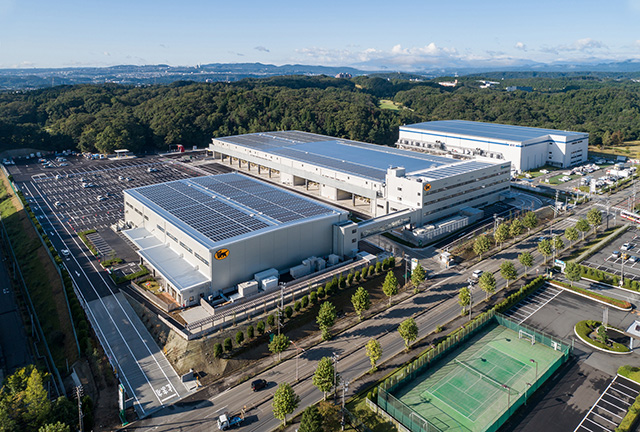
Aerial view of Hannover DC6

Sustainability is a Growth Strategy for Logistics Real Estate | Prologis 2025-26 GI&S Report

Published on
Content Above Blog Author

A sustainability report can often look like just a collection of numbers, but, for the Prologis sustainability report, those numbers tell a broader story about how we adapt to changing business conditions and prepare for the future.

That story starts with the changing role of logistics real estate. Customers need facilities that are efficient and future ready. Investors want assets that perform over the long term. Communities expect responsible development and economic opportunity.

Our work sits at the intersection of all three.

Prologis’ 2025–26 Global Impact & Sustainability Report shows how we are responding to changing customer needs, rising energy demand and evolving market expectations across our business. Here are five themes on how integrating sustainability into our business strategy creates value for our customers, investors, employees and communities.  

How to boost sustainability for logistics facilities  

Sustainability starts with future-proofed building decisions, including design, materials and operating efficiency. These choices can improve efficiency, enable logistics decarbonization, support customer and investor sustainability goals, and contribute to long-term asset performance.

In 2025, Prologis achieved, or was in the process of achieving, sustainable building certifications for 100% of eligible new logistics real estate development and redevelopment projects. More than one-quarter of our logistics real estate portfolio is now sustainably certified, as is 37% of the space leased by our 25 largest customers.

We use life cycle assessments early in the development process to model the likely carbon impact of building materials and operations. We also apply an internal price of carbon so teams can weigh emissions alongside cost and performance when making design decisions, supporting efficient logistics decarbonization. 

Exterior view of San Leandro

Energy resilience matters more than ever

As energy demand grows, logistics facilities can play a larger role in supporting customer operations and the energy needs of surrounding communities.

In 2025, we surpassed 1 gigawatt of solar and storage capacity across our owned and managed properties. This includes solar that provides power to our own buildings, as well as community solar projects that help expand access to renewable energy to surrounding communities. We also set a goal to double that overall capacity by 2030, reaching 2 gigawatts of cumulative renewable energy and storage capacity. 

Net zero warehouses depend on data, execution and customer partnership

Achieving net zero greenhouse gas emissions across our value chain by 2040 means reducing emissions associated with customer energy use in our logistics facilities, which, together with development-related emissions, account for most of our footprint.  

In 2025, our Scope 3 emissions remained 30% below our 2019 baseline. We also expanded utility data coverage and quality across our global portfolio, giving us a more complete picture of emissions performance and helping us identify opportunities to improve.  

Because most of our emissions are Scope 3, progress depends on partnership. We do not control how our customers operate, but we can support better outcomes and their business goals through more efficient buildings, renewable energy solutions and improved utility data.

How innovation is reshaping logistics real estate and supply chains

Preparing for the future also means testing new ideas and scaling what works.

Prologis Ventures has invested $300 million in more than 50 seed- to growth-stage companies globally since launching in 2016. These investments focus on innovations that can improve supply chain resilience and efficiency, modernize industrial building design and operations, and support smarter energy use.

In 2025, Prologis Ventures backed companies working on high-efficiency data center cooling, low-carbon building materials and autonomous building controls, all areas shaping the future of data center real estate and industrial development.  

Innovation is also happening inside Prologis. In 2025, 90% of employees used AI-enabled tools to help automate workflows and support faster, better-informed decisions. More than 4,500 buildings were connected through IoT-enabled systems, supported by more than 100,000 devices generating insights that can help optimize energy use, improve space utilization and support emissions reduction efforts.

Read the Prologis sustainability report for a look ahead

Our Global Impact & Sustainability report is designed to provide our stakeholders with a clear view of our progress and priorities.

Our work will continue to evolve as customer needs, energy markets, regulations and technologies change. Our focus remains the same: practical execution that creates long-term value for customers, investors, employees and communities.

For more information, read the full 2025–26 Global Impact & Sustainability Report.

Suzanne Fallender

Suzanne Fallender

Position
VP, Global Impact & Sustainability

Suzanne Fallender leads the company’s global impact and sustainability strategy, stakeholder engagement activities, public reporting and strategic initiatives. Prior to joining Prologis, Suzanne served as global director of corporate responsibility at Intel Corporation, where she oversaw ESG disclosure and drove the development and launch of Intel’s 2030 corporate responsibility strategy and sustainability goals. Prior to Intel, she served as vice president at Institutional Shareholder Services where she led the company’s social investment research division. She holds an M.B.A. from the W.P. Carey School of Business at Arizona State University and a B.A. from Trinity College in Hartford, CT.