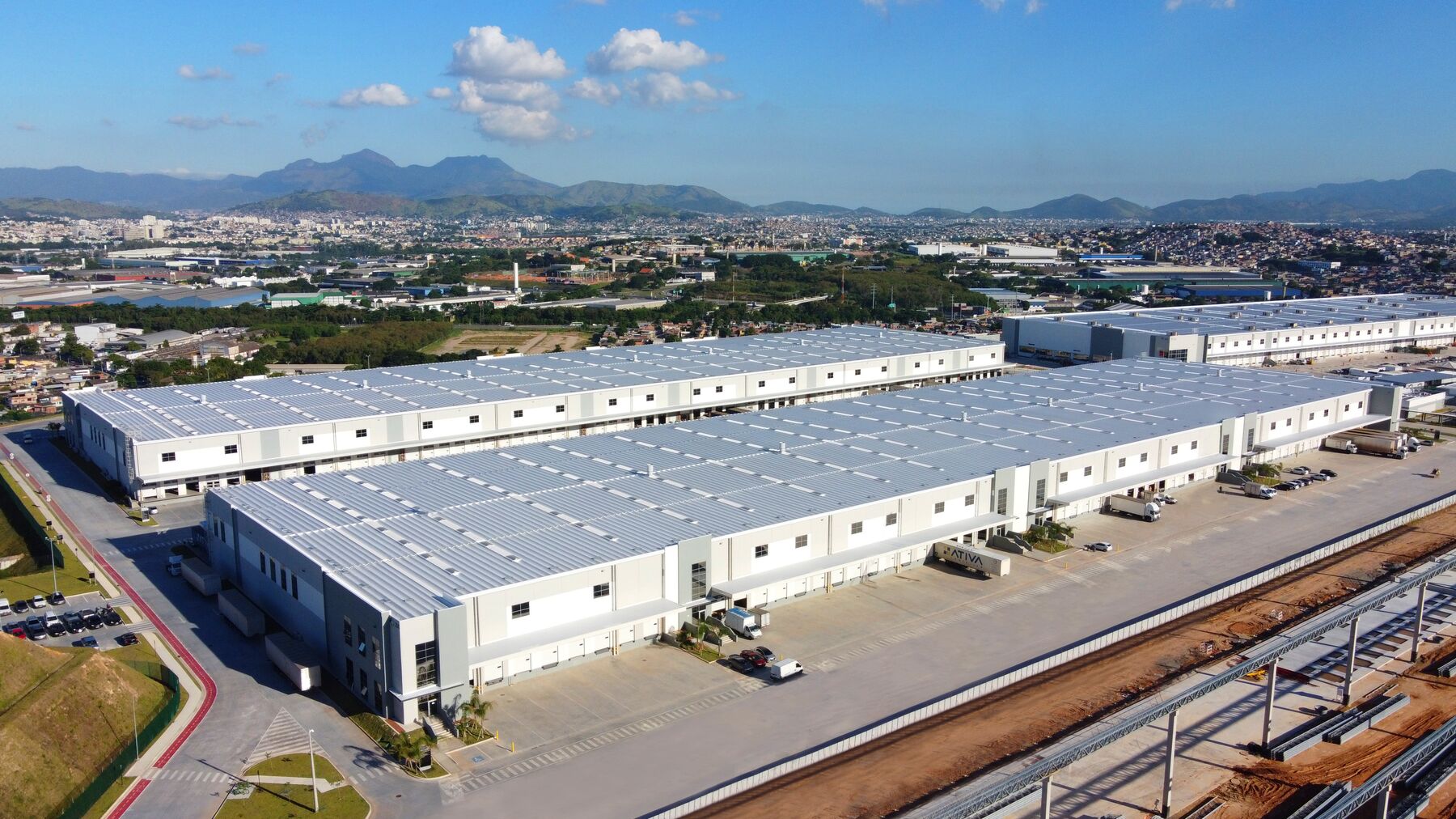
Prologis Dutra, Rio De Janeiro, Brazil

2025: Pause Shifts to Progress as Rents Approach Inflection

Published on

Introduction

2025 delivered new shocks to global supply chains, but logistics occupiers adapted by focusing on long-term supply chain needs, escalating demand through the year. Rents reflected this dynamic: in the first half of the year, rents declined by 2.3% as customers paused leasing decision-making, awaiting clarity around economic conditions and trade policy. By the third quarter, sentiment began to shift. Long-term planning reemerged as customers moved forward with leasing decisions and looked through the noise of ongoing volatility. Rent declines slowed to -1.4% in the second half of the year. This shift marks a critical transition period for occupiers, operators, investors and developers as planning for 2026 accelerates.

2025 Rent Growth

Global: -3.7%                                         U.S./Canada: -4.9%                                  Europe: -2.9%

Source: Prologis Research.

The Prologis Rent Index combines expert local market insights with proprietary data to analyze net effective rental growth trends across North America, Europe, Asia and Latin America. Regional and global rates are weighted by market revenue (market stock multiplied by the average rental rate).

Takeaways

  1. Repricing slowed through the year as market fundamentals stabilized. Softness in early 2025 gave way to renewed activity from large users and e-commerce operators once trade policies fell into a narrower band of potential outcomes. Rent declines moderated in weaker markets while stronger markets continued to post growth. By year-end, stability emerged across a broader set of markets, with 40% of markets showing flat to positive rent change from year-end 2024 levels.
  2. Cost-sensitivity shaped location decisions across global markets. With operating and capital costs elevated, logistics users prioritized careful expansion, keeping interest high and driving pricing in markets and submarkets with lower labor and regulatory costs, as well as lower rents.
  3. A wide gap between market rents and replacement-cost rents constrained new supply. With replacement-cost rents sitting 20% above market rents, development has pulled back sharply. High construction costs, regulatory barriers and tighter financing limited new supply.
  4. Healthy demand proved more important to rent resilience than vacancy alone. Consumption anchored demand, concentrating activity and rent growth in areas of positive demographic and spending growth. Manufacturing-heavy regions in Mexico, Canada and China faced demand and rental headwinds due to uncertainty around trade policies. 

Global Trends and Outlook

Trend #1: Global demand has reached an inflection.

Global net absorption accelerated to 436 MSF on a seasonally adjusted annual basis in the second half of 2025, rising from a pace of 393 MSF in the first half of the year. 

As potential trade policy outcomes narrowed throughout 2025, large users reengaged in leasing negotiations. This expression of pent-up demand accelerated strategic decisions to consolidate and modernize operations and pursue build-to-suits, benefiting newer large-format facilities disproportionately. Improving demand conditions moderated rent declines, even in markets with still-high vacancies such as Spain, Dallas, and the Southwestern U.S., with some markets even seeing moderate growth.

Rents declined as landlords competed for customers, with the sharpest declines in the U.S./Canada at -4.9% year over year. Outside of the U.S./Canada, rents declined more modestly, only -2.3%.

Trend #2: Cost-sensitivity persisted, driving tenants to prioritize leasing in less expensive markets.

Macro uncertainty and expensive capital caused businesses to scrutinize costs across the supply chain, particularly as operating costs beyond warehouse rent escalated sharply in recent years (e.g., property taxes, insurance and labor). In some global markets, operating expenses rose 20% year over year in 2024, equal to about 20% of gross rent. A pullback in triple-net rents in high-cost gateway and Last Touch® markets is luring back some large customers with flexible balance sheets, but many businesses continued to consider alternative locations depending on use case and related supply chain costs like labor and transportation.

Trend #3: Supply constraints are reinforcing the value of existing logistics space.

Replacement-cost rents are approximately 20% above market rents globally, making speculative projects unviable in most locations. In 2026, global completions should fall to their lowest level since 2018 at 474 MSF. In the U.S., completions should fall to their lowest level in a decade. Especially in Europe, grid constraints have emerged as a new barrier to supply, compounding longstanding land and regulatory limitations. Fewer deliveries should result in occupancy gains and push rents higher.

Trend #4: Demand-drivers tracked more closely with patterns of rent growth.

Manufacturing-heavy regions in Mexico, Canada and China faced rental headwinds from uncertainty around tariffs. U.S. gateway markets repriced on elevated operating costs even as new supply remained very limited and trade stayed healthy, with import volumes in U.S. gateway markets in line with 2024 levels and approximately 4% higher than the 2021–2024 average. Despite policy uncertainty, global consumption remained stable, and retail sales grew by 2.0% globally. E-commerce expansion led sales growth at 6.3% year over year, outperforming offline by 430 bps. Expansion of consumption-related demand was particularly prominent in demographics-driven geographies, such as Mexico City, the U.S. Sunbelt and Spain.

Outlook

A new cycle is kicking off. Early growth phases from recent prior cycles look similar, with flight-to-quality and larger customers in larger spaces leading demand. Supply has eased, demand is accelerating and broadening; and the bottom for rents is forming. As a result, Prologis Research expects moderate global rent growth in 2026 with variability by location, size and quality.

Increased concessions made up a larger portion of rent declines.

Prologis is the only global leader in the logistics real estate industry that reports market-level net effective rents (NERs), which account for free rent and annual escalations. By isolating the economic value of a lease, NERs capture the full impact of changing market conditions. This approach provides a transparent view into true pricing conditions at a time when headline rents alone can significantly distort the story, particularly as markets transition from peak scarcity to a more balanced environment.

Pricing power dynamics favored tenants in the dealmaking process. In the U.S., concessions made up 12% of NER declines. Concessions rose more sharply in Europe than in the U.S., as headline rents remained anchored in 2025. In Europe, they increased 40% year over year to 11% of headline rent, more than double their level in 2022. Given the position of each geography in the cycle, the rise in concessions reflects pricing power dynamics: the U.S.’s more volatile cycle put equal downward pressure on both headline rents and concessions as the pandemic boom effect unwound; in Europe, a heavier tilt toward increased concessions to drive occupancy reflects its lower vacancy and the potential for faster positive net effective rental growth as free rent declines.

Regional Highlights

United States

U.S. rents fell 4.5% in 2025, an improvement from the 6.5% decline in 2024, with similar out- and underperforming locations. Coastal markets recorded -7.6% year-over-year rent change, after correcting by -9.7% in 2024, on improving but still-subdued demand trends, while stronger leasing trends in inland markets produced less downward pressure (-3%) year over year despite still-elevated vacancies. Cost-efficiency goals also drove the pursuit of “best value” facilities, i.e. newly completed and large-format buildings often in more distant markets or submarkets offering lower rental rates.

Driven by cyclical forces, low freight rates and a front-loading inventory strategy facilitated the trade-off between building quality and proximity to the largest consumer pools. At the same time, Sunbelt markets benefited from catch-up demand to meet past years’ population growth, manufacturing-related requirements and space needs related to data center components. Relative pricing trends are showing signs of a potential 2026 reversal alongside stabilizing economic trends, as a transition from market correction to recovery would reemphasize speed to market and the need to control rising transportation costs.

Europe

Rents declined 2.9% year over year as landlords increased concessions to raise occupancy. Concessions have doubled from pandemic-era lows, reflecting normalization and a corrective response to softer market conditions. Weakness was concentrated in high-operating-cost markets and those with elevated recent deliveries and vacancies, including Poland, Slovakia and Sweden. Several Southern European markets, including Italy and Spain, recorded positive rent growth through 2025, achieving cumulative five-year gains in line with the broader European average.

Rental declines were concentrated in the first half of 2025, with the fourth quarter showing flat-to-modest growth signaling an inflection point. Vacancy should tighten alongside fewer new deliveries in 2026. In turn, this should put upward pressure on rents, led by markets where vacancies are relatively low, the pipeline is very limited and even small increases in demand can reintroduce competition for scarce space (e.g., Netherlands, Germany).

Asia

China  

Rents fell 11.8% year over year in 2025, marking the third consecutive year of declines amid broad oversupply. The North and East led the downturn, with rents dropping 18.9% and 12.8% year over year respectively as landlords prioritized occupancy. The rental cycle is increasingly bifurcating by region: the South is entering a downturn, likely the shortest among all regions, due to concentrated new supply and weaker cross-border e-commerce demand, while the West is nearing a bottom, with vacancies falling to single-digit levels after several years of low new supply.

Japan

Rents grew 1.8% year over year in 2025, maintaining steady momentum on the back of stable fundamentals and inflation expectations. Inland Tokyo saw rent growth moderate to 1.7% (-30 bps vs. 2024) as the market continued to absorb excess supply delivered through 2023. In contrast, Inland Osaka maintained a low vacancy rate of around 5% given strong demand, with rent growth accelerating to 2.3% year over year. Looking ahead, new supply is expected to drop from 2025’s peak, supporting faster rental growth going forward.

Latin America

Mexico

Net effective rents in U.S. dollars increased 3.2% year over year in 2025, a similar figure to 2024. Performance was highly differentiated by market, with the consumption markets of Mexico City and Guadalajara showing almost double-digit rent growth, while manufacturing-heavy markets ranged from flat to down -8.2% year over year.

The consumption markets’ rent growth was driven by strong demand for modern space, with Mexico City on track to posting its highest net absorption in history at 9 MSF, boosted by both e-commerce users expanding and fast-moving consumer goods (FMCG)/durables retailers modernizing their supply chain. Of note, rents in consumption markets grew 9% in dollar terms amid a 9% appreciation of the Mexican peso; as a result, customers with peso-denominated revenues saw little increase in peso-denominated rental costs.

Brazil

Brazil was the global leader in rent growth for 2025. Net effective rents increased 11.2% year over year after rising 18.7% year over year in 2024. Vacancy in São Paulo is on track to reach 7% by year-end (180 bps lower year over year), a record low, while demand is close to a record level, boosted by existing e-commerce platforms’ organic growth and new Asian users entering the space. This strong performance is expected to continue, as we estimate rents in São Paulo stand 12% below replacement cost rents.

Endnotes

  1. Prologis Research.

  2. Source: CBRE, C&W, JLL, Colliers, Fraunhofer, Gerald Eve, Solili, Buildings.br, Prologis Research.

  3. Prologis Research.

  4. Freightwaves. Various U.S. Port Authorities.

  5. US Bureau of Economic Analysis.

  6. U.S. Census Bureau, Emarketer.

  7. Source: CBRE, C&W, JLL, Colliers, Fraunhofer, Gerald Eve, Solili, Buildings.br, Prologis Research.

  8. Source: CBRE, C&W, JLL, Colliers, Fraunhofer, Gerald Eve, Solili, Buildings.br, Prologis Research.

  9. In local currency for the markets where Prologis operates.

  10. Source: CBRE, C&W, JLL, Colliers, Fraunhofer, Gerald Eve, Solili, Buildings.br, Prologis Research.

Forward-Looking Statements

This material should not be construed as an offer to sell or the solicitation of an offer to buy any security. We are not soliciting any action based on this material. It is for the general information of customers of Prologis.

This report is based, in part, on public information that we consider reliable, but we do not represent that it is accurate or complete, and it should not be relied on as such. No representation is given with respect to the accuracy or completeness of the information herein. Opinions expressed are our current opinions as of the date appearing on this report only. Prologis disclaims any and all liability relating to this report, including, without limitation, any express or implied representations or warranties for statements or errors contained in, or omissions from, this report.

Any estimates, projections or predictions given in this report are intended to be forward-looking statements. Although we believe that the expectations in such forward-looking statements are reasonable, we can give no assurance that any forward-looking statements will prove to be correct. Such estimates are subject to actual known and unknown risks, uncertainties and other factors that could cause actual results to differ materially from those projected. These forward-looking statements speak only as of the date of this report. We expressly disclaim any obligation or undertaking to update or revise any forward-looking statement contained herein to reflect any change in our expectations or any change in circumstances upon which such statement is based.

No part of this material may be (i) copied, photocopied or duplicated in any form by any means or (ii) redistributed without the prior written consent of Prologis.

About Prologis Research

Prologis’ Research department studies fundamental and investment trends and Prologis’ customers’ needs to assist in identifying opportunities and avoiding risk across four continents. The team contributes to investment decisions and long-term strategic initiatives, in addition to publishing white papers and other research reports. Prologis publishes research on the market dynamics impacting Prologis’ customers’ businesses, including global supply chain issues and developments in the logistics and real estate industries. Prologis’ dedicated research team works collaboratively with all company departments to help guide Prologis’ market entry, expansion, acquisition and development strategies.

About Prologis

Prologis, Inc., is the global leader in logistics real estate with a focus on high-barrier, high-growth markets. At December 31, 2025, the company owned or had investments in, on a wholly owned basis or through co-investment ventures, properties and development projects expected to total approximately 1.3 billion square feet (120 million square meters) in 20 countries. Prologis leases modern logistics facilities to a diverse base of approximately 6,500 customers principally across two major categories: business-to-business and retail/online fulfillment.