
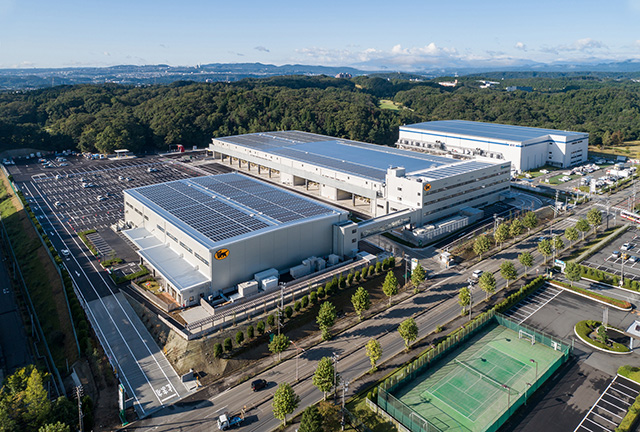
Elk Grove Data Center

How data centers benefit communities and power the digital economy

Published on
Content Above Blog Author

A single data center project can change the economics of a community. As an example, for one Prologis project, land that would generate about $500,000 in commercial property taxes over 20 years could generate roughly $500 million over the same period if developed as a data center.

The benefits are not limited to more tax revenue. Done well, data centers can help communities in several ways:

  • Fund public priorities such as schools, libraries, parks and critical local services like first responders
  • Create thousands of construction and other related jobs
  • Contribute to long-term utility and infrastructure planning

On top of that, data centers support the digital services people and businesses use every day. When you log into social media, deposit a check via an online banking app or look up a test result in your healthcare provider’s online platform, data centers play a role. That was one focus of my recent conversation with Josh Levi, president and CEO of the Data Center Coalition, on the Moving the World podcast. 

Moving the World Podcast

Here are the biggest takeaways from our conversation.

  1. Our digital world is driving up the need for data centers

Today, demand for data centers is growing as the world increasingly transitions to a digital world. In fact, Goldman Sachs has estimated that US data center power demand is forecast to more than double to 66 GW in 2027 from 31 GW in 2025. That’s why data centers are showing up more often in local planning conversations, utility filings and national policy discussions.

For Prologis, data centers are a natural extension of our core capabilities. The sector depends on strategic locations, access to power, development expertise, capital discipline and long-term customer partnerships. Those are the same fundamentals that define our logistics real estate business.

  1. Data centers support businesses, public services and daily life

Josh put it plainly in our conversation: “I am very hard pressed to think of an industry that doesn’t rely on data centers.”

Data centers may be less visible than roads, ports or power lines, but they are increasingly central to how the economy operates. For example, data centers enable hospitals to use digital imaging, retailers to track inventory in real time and residents to access government services online.

  1. Data centers can contribute to energy reliability and affordability

After years of relatively flat electricity demand, the U.S. is entering a new period of growth tied to investment in areas such as digital infrastructure, advanced manufacturing and automation.

That growth can be managed responsibly when utilities, regulators and developers plan for new load and the infrastructure needed to support it.

A 2026 report from Energy and Environmental Economics (E3) found no historical evidence that data centers have driven increases in residential electricity costs under existing rate structures. Additionally, E3’s report looked at four Amazon data centers in different utility territories and found that each site generated about $3.4 million, on average, in net surplus revenue, meaning payments to the utility exceeded the incremental cost to serve the facility.

The same report also points to the role of strong policy design to best ensure data centers can be integrated in ways that support long-term reliability and affordability. Utility and rate structures help utilities and regulators assign costs appropriately and protect ratepayers as large energy users connect to the grid.

  1. Data centers bring jobs and new tax revenue to local communities

At the national level, the U.S. data center industry supported 5.5 million jobs and generated $204.4 billion in federal, state and local tax contributions in 2024.

Local examples show what that can mean in practice. In Virginia, there are counties where data center revenue now funds about 25% to 40% of local budgets, helping to reduce local taxes and fund public priorities. In Henrico County, data center revenue helped create a $60 million affordable housing trust fund to support teachers, first responders and other residents looking to buy homes in the county.

  1. Industry collaboration enables responsible growth

Data center growth requires coordination across companies, utilities, regulators and local governments. The Data Center Coalition was formed to help bring the industry together, build a shared fact base and communicate more clearly with policymakers and communities.

The next phase of growth will require more power generation, more transmission capacity, faster interconnection processes and continued innovation in cooling, storage and on-site energy.

That is where the DCC can play an important role: helping communities understand local impacts and benefits, giving utilities better visibility into future load, supporting regulators with the information they need to protect reliability and affordability, and encouraging developers to design projects that fit local conditions.

To learn more about data centers, you can listen to my conversation with Josh Levi on Spotify, Apple Podcasts or YouTube 

Chris Curtis

Chris Curtis

Position
Global Head of Data Centers, Prologis

Chris Curtis serves as global head of data centers at Prologis. In addition, Chris serves on the Data Center Coalition Board and the Urban Land Institute (ULI) Data Center Product Council. A seasoned data center expert, Chris brings more than 5 gigawatts of data center development experience across the U.S., Canada and Europe. Before Prologis, Chris co-founded Compass Datacenters, where he led all development projects from 2011 to 2023. Prior to that, he spent a decade developing high-security, build-to-suit projects for U.S. Federal Government agencies.