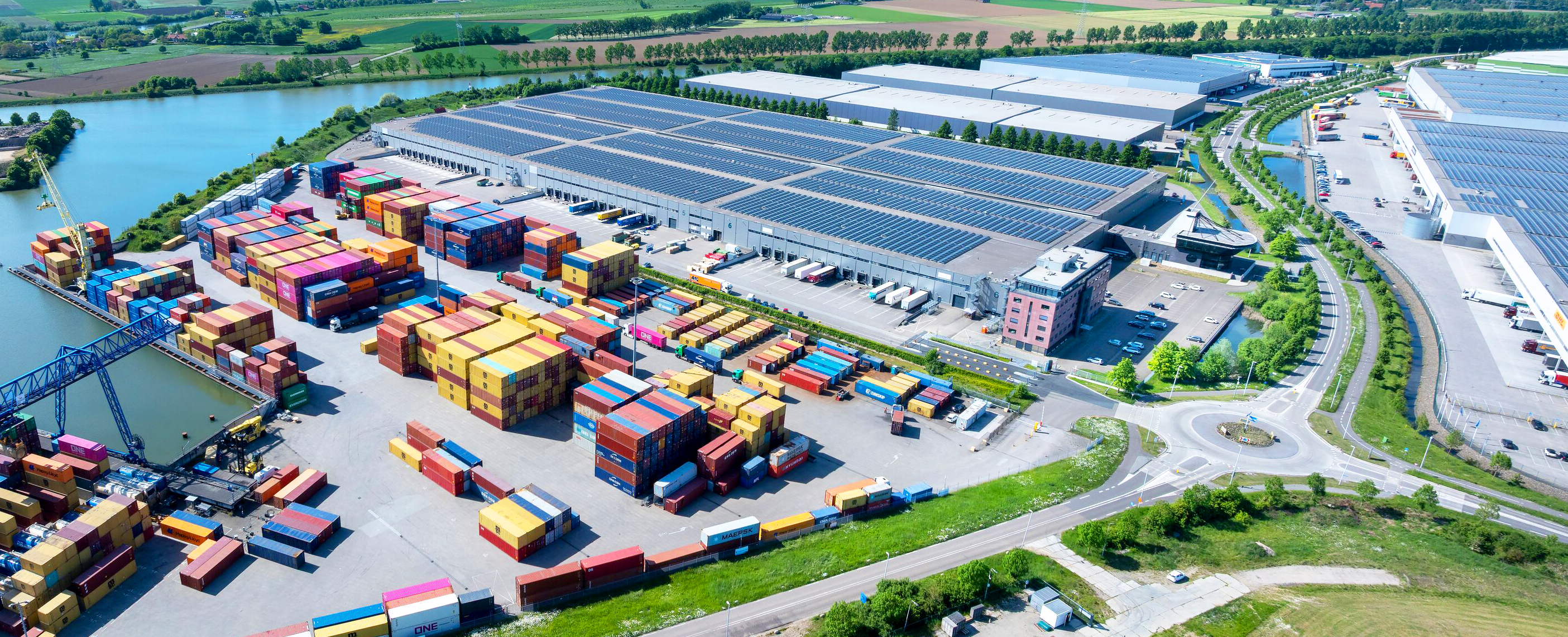
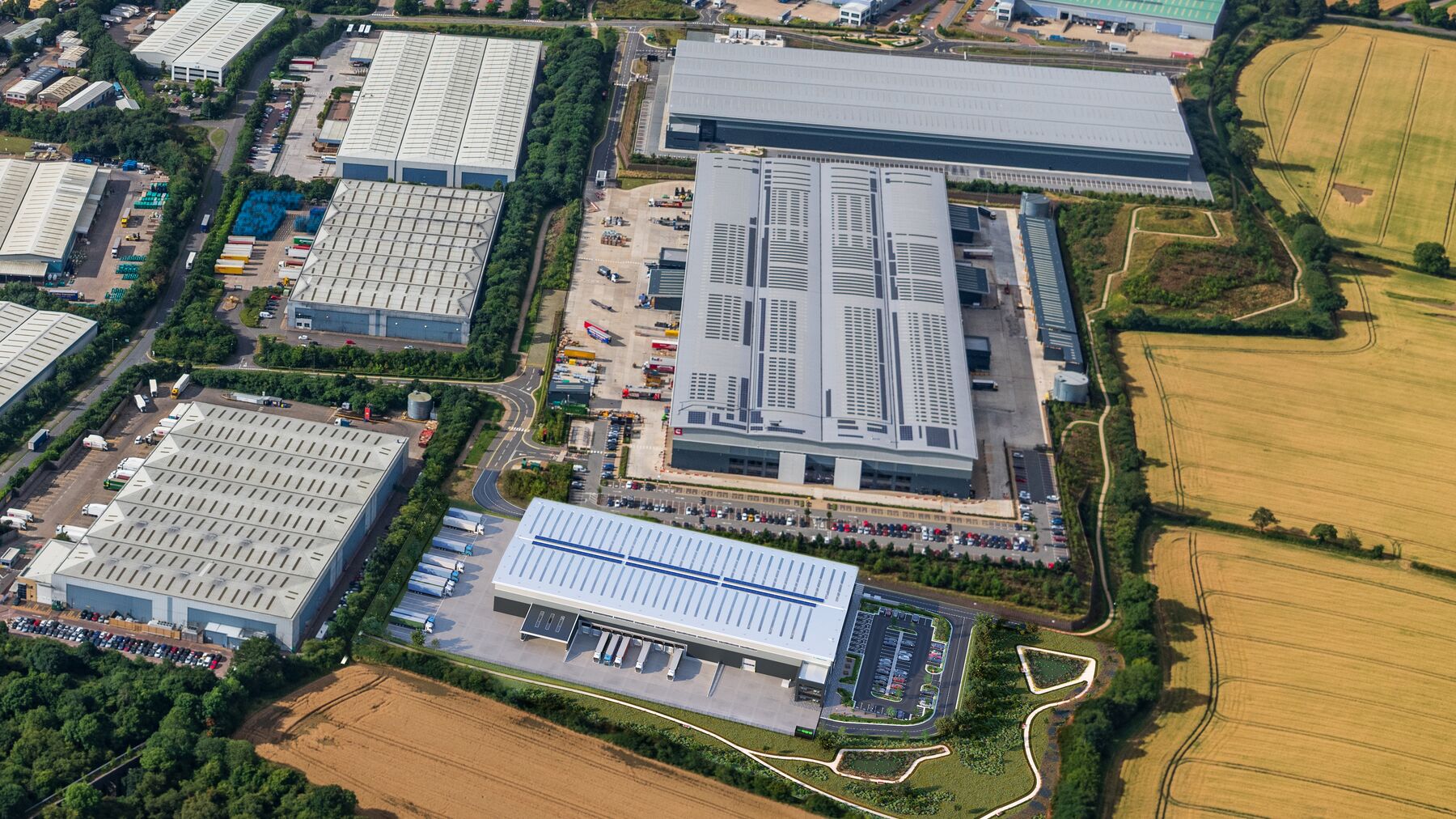
Aerial view of Prologis Park Roosendaal DC3

Persistent Supply Constraints Position Europe for Value Growth

Published on

Rising barriers to supply are redefining value in European logistics. The European logistics real estate market, valued at €500 billion,i is both large in scale and increasingly constrained. Regulatory complexity, labor shortages and infrastructure limitations are slowing development and raising costs. In this environment of scarcity, well-located modern stock is emerging as a critical source of value. Consistently, performance metrics reflect this shift: assets near end consumers in supply-constrained markets are already delivering stronger rent growth than assets in peripheral locations. Developers with the ability to launch new projects in such areas hold a distinct competitive advantage.

  • Europe’s available inventory isn’t enough to serve the consumer base. More than €150 billionii in new development is needed to close the gap. This represents one of the largest logistics real estate opportunities globally, but only where new supply can still be built.
  • Barriers to new supply are structural, rising and concentrated in locations close to consumers. This dynamic is pushing new buildings farther from end consumers, adding costs to operations and value to existing well-located space.
  • Proximity to consumers sets logistics assets apart. Facilities in dense, supply-constrained markets deliver consistently stronger rent growth over time.
  • Modern facilities meet the standards occupiers seek and deliver stronger performance. In markets where it’s available, occupiers pay a ~9% premiumii for modern high-quality stock. 
  1. Current available modern stock in Europe is not enough to meet the demand of logistics customers, particularly in key consumer-driven locations. Prologis Research’s proprietary Modern Logistics Concentration (MLC) metric, developed in 2015, measures the amount of modern logistics stock relative to the number of consumer households in a market. It captures how well local logistics infrastructure meets consumption-driven demand. Europe’s current MLC of 30, compared to U.S.’s 75,i reveals a structurally underserved market. However, given Europe’s denser urban form and more efficient logistics networks, the equilibrium level is likely below that of the U.S. A more appropriate benchmark is 50, which still implies a significant shortfall. At today’s pace of normalized development, it would take approximately eight years to reach this level, requiring more than €150 billion in new construction.ii This underscores both the scale of unmet demand and the magnitude of the long-term opportunity for modern stock expansion in markets where development remains feasible. Importantly, given the growing constraints on new development, this supply gap is not only unlikely to close, it is actively supporting performance momentum for existing logistics real estate in key markets today.
  1. New development is being built away from population centers on the only available development land. In 2014, roughly one-third of all logistics development in Europe took place in urban, consumer-proximate locations.i By 2024, that share had halved. This decline is not demand-driven: Urban logistics remains a top priority for occupiers seeking proximity to end consumers. Instead, the drop reflects intensifying barriers to supply at the consumer end. The resulting scarcity is pushing rents higher in these core locations, reinforcing performance momentum relative to other markets with more elastic supply environments. At the margin, rising rents are also making brownfield redevelopment in consumer locations more viable. While costly and complex, these projects represent one of the few avenues to add modern stock close to end consumers.

Land has become more scarce in consumption hubs.

Only 15% of starts were in City Distribution or Last TouchTM markets in 2024.

  1. Scarcity near consumers is driving a location premium. In dense, supply-constrained markets, location remains the dominant source of value in logistics real estate. Assets with proximity to end consumers consistently outperform, with City Distribution and Last Touch® locations delivering annual rent growth 25 and 130 basis points above the European average over the past decade, respectively. In the past three years, that gap has widened to 150 and 240 basis points,ii demonstrating the enduring strength of the location effect. This trend is reinforced by demographic shifts. While Europe’s overall population is projected to decline modestly by 0.5% over the next decadeiii, urbanization continues to accelerate. The 15 fastest-growing cities are expected to add 2.5 million residents over the same decade, concentrating demand and reinforcing the value of well-located logistics assets positioned close to urban consumers.

  1. Modern facilities command a distinct quality premium. Occupiers consistently choose new stock where it is available, and are willing to pay more for it. Vacancy data highlights the scarcity: In the UK, availability for modern logistics space stands at just 4%, compared with 8% market-wide.iv And portfolio-level analysis confirms the dynamic: In markets where modern stock is available, occupiers consistently reward quality, paying a 9% premium.ii

Supply Barriers: Four Buckets Shaping Logistics Development

The imbalance between demand and supply in European logistics real estate is being driven by four structural barriers. Each is persistent, quantifiable and compounding in its impact on development timelines and feasibility. These headwinds are reinforcing scarcity in key locations and amplifying the value of deliverable land and standing modern stock.

  1. Regulatory and Legal Barriers
    Entitlement has become one of the clearest structural bottlenecks to logistics supply. Timelines have doubled across much of Europe over the past five years, and in some markets the process can take as long as 15 years.ii Even within zoned areas, timelines are highly variable, determined not just by national policy, but by local officials. A change in political leadership or technical reviewers (e.g., fire safety authorities) can reset requirements mid-process. This uncertainty, combined with increasingly layered regulations, is reducing visibility and delaying starts.
  2. Infrastructure and Capacity Constraints
    Land, infrastructure and labor constraints are no longer cyclical, they’re structural.
    1. Europe’s logistics stock has expanded by more than 130% since 2007, ii naturally depleting land. Land near urban centers and along strategic corridors is increasingly scarce, particularly in mature markets.
    2. Labor availability has become a structural barrier, shaped by demographic headwinds, skills mismatches and persistent competition from other sectors. Unemployment across the EU27 is at a record-low 5.8%v, but even in softer economic conditions, structural shortages in construction and logistics trades limit development capacity. This has fueled the need for warehouse automation.
    3. Grid capacity has emerged as a binding constraint. As the European market accelerated its transition to renewable energy, the infrastructure lagged. Existing electrical infrastructure was not designed to accommodate high and variable inputs from renewable energy, nor the rising energy needs of modern society (including EV, data centers and others). Developers in some markets now face grid delays, connection caps and even curtailment risks, forcing investments in microgrids, onsite storage and backup systems. These systems can raise development costs by 10%ii or more and require a high degree of technical integration, making execution expertise a growing differentiator in delivering resilient, future-ready assets.

  1. Sustainability and Environmental Constraints
    The number of sustainability legislations introduced in 2024 is a multiple of what was seen a decade ago, and their impact is material.vi Elevated environmental standards are raising construction costs by 5% to 15%ii depending on geography, developer profile and occupier requirements. Regulatory frameworks such as the EU’s Energy Performance of Buildings Directive (EPBD) are mandating higher efficiency thresholds, including solar installation on all new logistics buildings starting in 2027. A greater challenge is presented by the shifting regulations and definitions of what a sustainable building is. The result is a more expensive and uncertain entitlement process. At the same time, the scarcity of quality, compliant product is setting the stage for a potential scarcity premium. As demand for future-ready assets outpaces supply, particularly from occupiers with firm ESG mandates, upward pressure on rents could emerge.
  2. Political and Social Resistance
    With logistics stock having more than doubled since 2007 (+130%),i the sector has become more visible, and more contested. Resistance varies by market but typically centers on four themes: visual impact near residential zones, concerns over work conditions, environmental concerns tied to greenfield development and skepticism over logistics' long-term economic value compared to alternative land uses. These factors are adding a growing layer of complexity to the development process.

Europe’s logistics real estate market is defined by structural undersupply, with mounting barriers to new development reshaping both value and access to growth. Although vacancy has risen in recent years, supply barriers have kept levels close to frictional rather than elevated, even in a weaker demand environment. Modern stock has proven more resilient, highlighting occupiers’ ongoing preference for quality space. This dynamic underscores the long-term imbalance between demand and available product. In this context, existing facilities in prime locations are positioned for durable outperformance. Persistent supply constraints will continue to limit new product in these areas, reinforcing the pricing power of well-located assets. Developers with the ability to break ground in constrained, demand-rich markets will maintain a structural competitive advantage, as only those with the technical expertise, strong networks and executional skill to manage elongated entitlement timelines, infrastructure shortfalls, rising construction costs and social opposition can capture a growing share of unmet demand.

Why the Netherlands is Europe’s hardest place to build

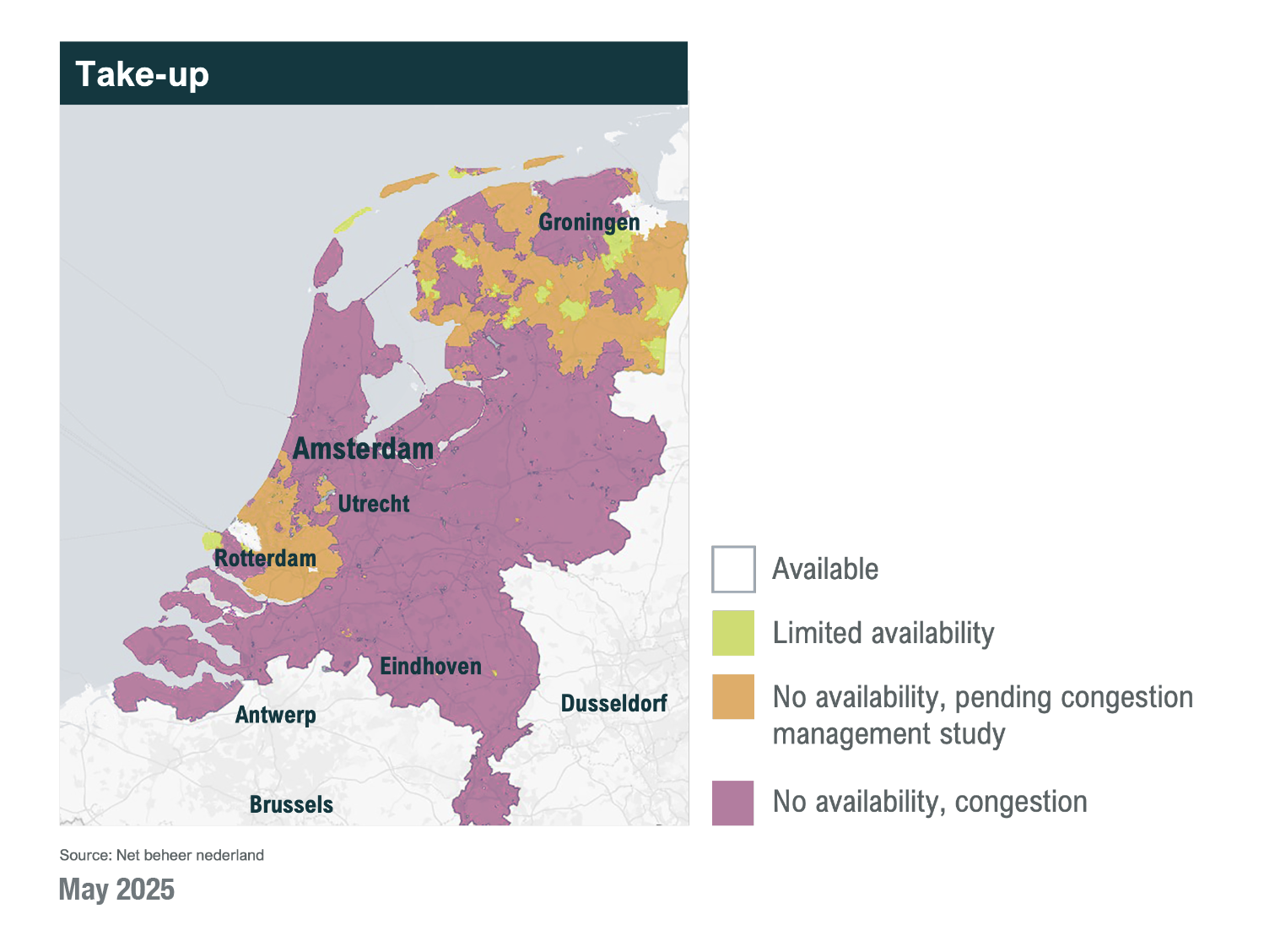
The Netherlands has some of the strictest energy and environmental regulations in the world for logistics real estate and can be used to anticipate how narrower natural resources will come to impact future development. On the infrastructure side, grid capacity is the most constrained in Europe, reflecting both surging electricity demand and a rapid green transition. Renewable energy’s share of electricity generation doubled between 2020 and 2024, reaching 50%vii, while electric vehicles grew from 3.3% of the car stock to 11% over the same period.viii A national nitrogen crisis, driven by EU environmental policy and high agricultural emissions, has severely limited permitting activity. At the same time, public pushback against the visual impact of distribution centers, known locally as "verdozing," is prompting tighter zoning restrictions. A further and increasingly significant complication stems from the permitting process, in which the almost unlimited right to file objections, now more frequently exercised in coordinated efforts by protest groups, can delay or obstruct development plans. Labor constraints further complicate the outlook: With 7.5% of construction jobs unfilled, the country has the highest job vacancy rate in Europe (EU: 2.8%).v Development activity is responding accordingly to these rising constraints: The number of new construction permits (for warehouses, sheds and greenhouses) issued is down 40% since 2012,vii not only because approvals have become harder to obtain, but also because fewer projects are being submitted in the first place, reflecting developer caution amid growing structural barriers.

Grid availability

Indication of ability to connect to power.

Grid operators expect capacity shortages to persist for the next 5–10 years, meaning congestion is now a structural supply constraint.

Grid Availability Map

Endnotes

i Prologis Research, CBRE, DILS, Fraunhofer, Newmark. Estimates are based on the 12 countries in Europe where Prologis has exposure.
ii Prologis Research.
iii Oxford Economics.
iv Newmark.
v Eurostat
vi JLL
vii CBS
viii IEA

Forward-Looking Statements

This material should not be construed as an offer to sell or the solicitation of an offer to buy any security. We are not soliciting any action based on this material. It is for the general information of customers of Prologis.

This report is based, in part, on public information that we consider reliable, but we do not represent that it is accurate or complete, and it should not be relied on as such. No representation is given with respect to the accuracy or completeness of the information herein. Opinions expressed are our current opinions as of the date appearing on this report only. Prologis disclaims any and all liability relating to this report, including, without limitation, any express or implied representations or warranties for statements or errors contained in, or omissions from, this report.

Any estimates, projections or predictions given in this report are intended to be forward-looking statements. Although we believe that the expectations in such forward-looking statements are reasonable, we can give no assurance that any forward-looking statements will prove to be correct. Such estimates are subject to actual known and unknown risks, uncertainties and other factors that could cause actual results to differ materially from those projected. These forward-looking statements speak only as of the date of this report. We expressly disclaim any obligation or undertaking to update or revise any forward-looking statement contained herein to reflect any change in our expectations or any change in circumstances upon which such statement is based.

No part of this material may be (i) copied, photocopied or duplicated in any form by any means or (ii) redistributed without the prior written consent of Prologis.

About Prologis Research

Prologis’ Research department studies fundamental and investment trends and Prologis’ customers’ needs to assist in identifying opportunities and avoiding risk across four continents. The team contributes to investment decisions and long-term strategic initiatives, in addition to publishing white papers and other research reports. Prologis publishes research on the market dynamics impacting Prologis’ customers’ businesses, including global supply chain issues and developments in the logistics and real estate industries. Prologis’ dedicated research team works collaboratively with all company departments to help guide Prologis’ market entry, expansion, acquisition and development strategies.

About Prologis

Prologis, Inc. is the global leader in logistics real estate with a focus on high-barrier, high-growth markets.  As of December 31, 2024, the company owned or had investments in, on a wholly-owned basis or through co-investment ventures, properties and development projects expected to total approximately 1.3 billion square feet (120 million square meters) in 20 countries. Prologis leases modern logistics facilities to a diverse base of approximately 6,500 customers principally across two major categories: business-to-business and retail/online fulfillment.