
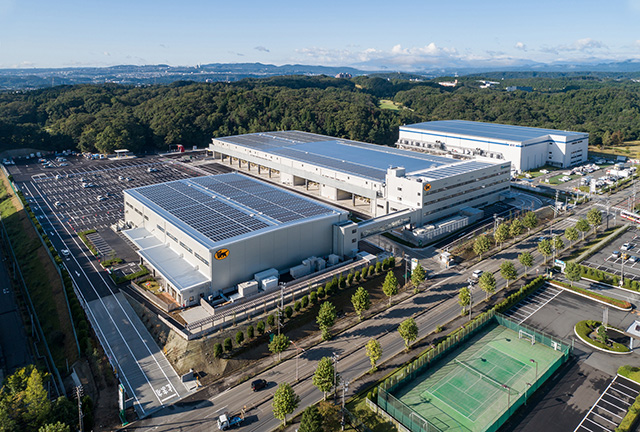
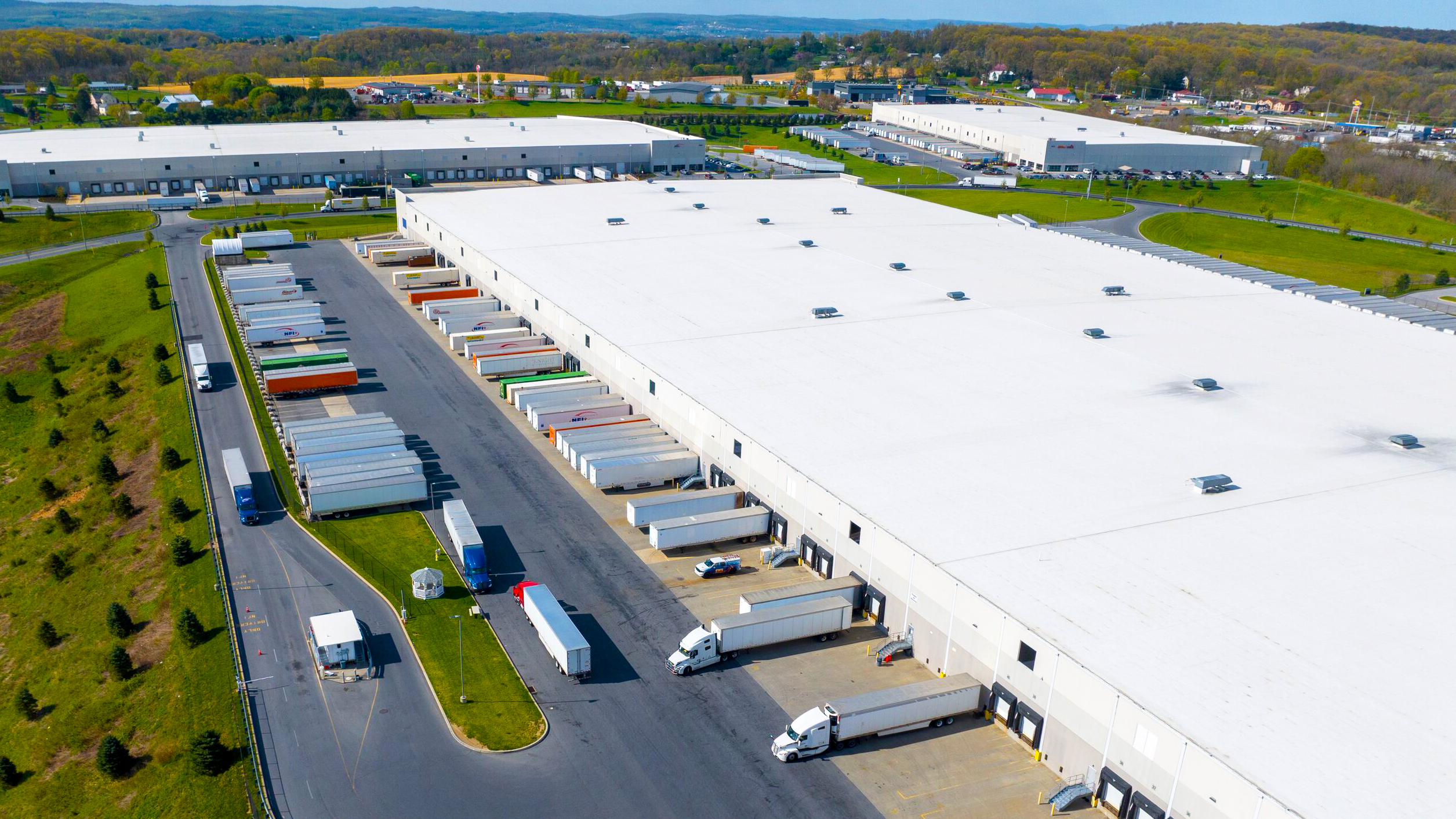
Aerial view of Lehigh Valley West

Interpreting Implications for Logistics Real Estate

Published on

Introducing our Leasing Driver Dimensions framework to navigate near-term uncertainty.

The logistics real estate sector faces heightened uncertainty amid shifting geopolitical dynamics, evolving trade policies and macroeconomic volatility. Within the market, demand is not moving uniformly—some customers pause strategic decisions while others proactively implement growth and resilience initiatives.

To understand why customers lease space, Prologis Research has developed a framework: the Leasing Driver Dimensions. We have identified five drivers (Topline Growth, Inventory Resilience, Production Location Repositioning, the Service Imperative and the Efficiency Mandate) through our research, discussions with customers and engagement with supply chain experts. This framework offers insight into why customers act differently, pushed by different trends through the cycle. Putting these trends together, we see the following short- and long-term trends:

  • Near-term demand is a balance between supply chain-related needs and high uncertainty. Growth in 2025 is expected to be shaped by shifting trade policies and economic concerns. Companies continue to invest, driven by demographic expansion, implementation of previously deferred plans from 2023 and 2024 and heightened inventory needs amid trade disruptions.
  • Flexibility and inventory management are critical. Volatile trade conditions prompt increased utilization of third-party logistics (3PLs) and existing warehousing to ensure supply chain resilience. Customers increasingly require agile logistics solutions to manage uncertainty and market fluctuations.
  • Shifting manufacturing locations are reshaping location selection for logistics. High-value sectors (such as semiconductors, pharmaceuticals and automotive) are accelerating near-shoring and U.S. production to mitigate geopolitical risks. Lower-value segments (such as plastic goods, apparel, furniture and electronics) are incrementally diversifying production across East and Southeast Asia, maintaining reliance on existing U.S. logistics gateways.
  • Long-term growth prospects remain strong. Secular trends—including rising e-commerce penetration, demographic-driven consumption and urban logistics needs—are anticipated to sustain robust logistics real estate demand, underpinning growth and stability through future economic cycles.

Leasing Driver Dimensions

The Leasing Driver Dimensions framework draws upon customer conversations, insights from supply chain experts and trends emerging within our active leasing pipeline—including transactions proceeding and those currently paused. The five key drivers of this framework are critical determinants shaping logistics real estate demand today and into the future. Find below a description of each of the five drivers, as well as our latest read on near-term and long-term factors driving leasing decisions for each dimension:

1. Topline Growth: Expectations for future growth are a top driver of leasing demand. In the near term, consumers show behavior that is both responsive to shocks (e.g., pre-buying) and cautious (e.g., seeking value in their purchases), leading to divergence in expectations by industry and company profile:

  • E-commerce remains a structural driver, whose growth will necessitate an additional 50 to 75 million square feet per year in the U.S. by 2030.i Multiple secular tailwinds fuel e-commerce growth, including increased online grocery shopping and other nondiscretionary goods, demographic shifts like millennials reaching peak spending years and consumer technology advancements such as AR/VR enhancing online shopping. Additionally, growth has accelerated in 2025 as companies shifted cross-border fulfillment onshore following the wind-down of de minimis provisions.
  • Core goods categories are resilient through economic uncertainty. Leasing decisions reflect product-category price and demand sensitivity. Nondiscretionary sectors (e.g., food, beverage and medical) typically display steadier demand, whereas discretionary sectors (e.g., housing-related products and automotive) are more cyclical.
  • Larger, diversified firms with robust financial profiles maintain more consistent leasing strategies based on internal business needs rather than macroeconomic fluctuations. Smaller companies with narrower product offerings and limited financial flexibility tend to adjust logistics requirements in direct response to real-time economic conditions, expanding their real estate needs late in cycles and recovering slowly.
  • Long-term demographics and consumer product preferences drive revenue growth expectations and logistics real estate investments. Especially in key regions, strong population growth and an undersupply of housing require the expansion of supply chain networks.
  • Short-term economic uncertainty leads companies to be cautious, both in their growth outlook and in their cautiousness in long-term investing and capital expenditure planning. As a result, many companies are waiting as long as possible before signing a new lease, with space needed urgently after execution. As more positive economic growth comes into view, leasing sentiment improves and growth occurs at a more regular cadence.

2. Inventory Resilience: Near-term inventory holding patterns fluctuate based on the perceived risk of missing revenue due to stockouts and the margin erosion from excess inventories that sell slowly and require discounting. Temporary factors, such as timing imports to avoid higher tariffs, are also driving changing inventory patterns and related logistics real estate needs in 2025:

  • Customers stock up on inventory to mitigate future risk amid shifting policies. Frontloading of inventories began in late 2024, and after a brief pause following the April 2 tariff announcements, reaccelerated since mid-May as the pause in tariffs created an opportunity to stock up ahead of future changes. On-water shipments are now 12% higher year-over-yearii, with expectations for record volumes in coming months in the ports of Los Angeles and Long Beach.
  • Logistics real estate utilization levels have increased through 84% to 85% and higher.i Some facilities pushed utilization high ahead of expected tariffs. Some used the assistance of third-party logistics firms to manage the temporary flux of inventories.
  • Logistics facilities support both throughput and inventory storage, providing a buffer to cyclical demand when revenue growth speeds up or slows down. Specifically, storage needs fluctuate less than volatile throughput. This contrasts with other segments along the supply chain, such as shipping, trucking, rail and air freight, where demand is 100% based on throughput. This stability is reflected in our Industrial Business Indicatortm survey of logistics users. Over time, users reported less variability in utilization of warehousing space versus their business activity levels.

  • Near-term leasing activity will reinforce the need for flexibility from customers responding in real time to trade changes. Irrespective of product type, volatility in trade flows increasingly requires just-in-time warehouse provisioning. Third-party logistics providers play a critical role in this new landscape. Beyond offering operational expertise and efficiency, they help customers manage overflow requirements and short-term fluctuations in demand. Their investment in advanced technologies, automation and integrated transportation networks further strengthens overall supply chain responsiveness and resilience.
  • Structurally, persistent supply chain disruption stemming from geopolitics, natural disasters and scarce labor is likely to persist. Cyclical conditions exert a powerful influence on inventory patterns, producing lean inventories in 2024 despite continued disruption. Over the long term, companies will need to integrate higher inventory levels into regionalized supply chains to mitigate the risk of stockouts, volatile transportation costs and deteriorating service levels.

3. Production Location Repositioning: Changing trade policies are shifting optimal manufacturing locations, but these decisions extend beyond tariffs or lowest landed costs to include considerations like the strength of supplier networks, transportation ecosystems and proximity to global markets to solve for long-term risk management and revenue-generation potential. This is a structural shift that may take many years to flow through supply chains and prompt investment through all cycle stages.

  • High-value sectors with strategic importance (e.g., semiconductors and pharmaceuticals) are increasingly investing in U.S. production, and in the case of automotive, USMCA compliance. As a result, the share of manufacturing in U.S. logistics real estate new leasing has risen to 14% in the past three years from less than 10% pre-pandemic. The trend is most pronounced in Texas, Chicago and the Southeast (where manufacturing accounts for ~20% of new leasing, up from 13%) but is also present in pockets of the San Francisco Bay Area and Southwest. Additionally, high-volume data-center construction—requiring the manufacture and logistical support of servers, power distribution units and specialized cooling infrastructure—serves as a significant driver of manufacturing-related demand.iii
  • Lower-value, price-sensitive categories historically dominated by China (e.g., apparel, furniture, electronics and plastics) are likely to diversify incrementally across East and Southeast Asia—such as Apple’s move to open a factory in India. That shift illustrates a realignment of global manufacturing that preserves existing trade routes and logistics networks.

4. The Service Imperative: Urgency has become more important. Logistics real estate is playing a larger role in the provision of goods to households and businesses over time, and with that structural shift, supply chain capabilities increasingly determine winners and losers.

  • E-commerce’s share of leasing has accelerated in 2025 as more than 25% of sales occur through online channels.iii Despite uncertainty, companies continue to invest in e-fulfilment facilities as e-commerce represents about one-quarter of revenues and more than half of revenue growth across retailers on average.
  • Rapid replenishment for stores and businesses is a strategic capability when supply chains are disrupted. Expectations for choice, speed and customization do not stop at the online storefront. The ability to offer an omnichannel consumer or enterprise purchasing experience requires a localized and dynamic supply chain where inventories can be rapidly redirected as needs change.
  • Additional enhancements, such as tapping into a new segment or offering additional services, can also drive long-term supply chain needs. Examples include professional network support for consumer-focused companies and white glove assembly and customization.

5. The Efficiency Mandate: To navigate a more disrupted world where the competition for consumer dollars is ever-escalating, supply chain operators are turning to buildings to help manage risks, increase productivity and achieve corporate goals.

  • Deferring decisions creates pent-up demand. Many customers moderated supply chain investments in 2023 and 2024 as they absorbed capacity secured during peak pandemic leasing and optimized existing networks. Sustained uncertainty has limited access to financing and driven up associated costs, and scrutiny of capital expenditures has increased the appeal of renewals and added to the buildup of future supply chain needs. While constrained, most net new demand has been for buildings built in the past five years, underscoring the need for modernization throughout cycle stages.
  • Future business needs and rising risks will require investment. Business needs include enhancing productivity and achieving sustainability goals. Top risks include labor and energy access. As a result, what constitutes a “best-in-class” facility is shifting:
    • Modernization initiatives often include automation and technology integration, such as robotics, automated sorting and advanced inventory systems that improve efficiency, productivity and responsiveness to volatility. These initiatives also increase energy needs, playing into a top risk.
    • Many multinational customers now link facility decisions directly to their corporate emissions targets. For these customers, LEED-certified or net-zero-capable warehouses are in demand, solar-readiness is a leasing requirement and ESG compliance ultimately influences location choice and decisions on whether to renew. This trend is presently stronger outside the U.S.
    • Companies evaluating multiple locations prioritize access to a stable, skilled logistics workforce, proximity to training institutions or automation-friendly labor pools and worker commute options (e.g., public transit and housing affordability).
    • Utility availability and power security, especially in energy-intensive automated facilities, are paramount to users, and constraints here will limit new supply of logistics real estate over the long term. Grid strain in Sunbelt states, limited general power availability in countries like Mexico and brownout risk in urban cores have caused leasing hesitation or prompted requests for backup power generation, onsite energy storage, redundant feeds or microgrid capabilities.

Implications for Logistics Real Estate

Against a backdrop of continued uncertainty and consensus outlook for subdued macroeconomic growth in 2025, our Leasing Driver Framework can help navigate the balance between cyclical pressures and structural forces influencing demand for logistics real estate.

  • Uncertainty and cyclical headwinds cause a deferral—not a reversal—of decision-making. Customers are working urgently to resolve volatility in their day-to-day operations, delaying long-term planning. Geopolitical and economic scenarios seemingly change on a weekly basis, creating a difficult planning environment and uncertain near-term outlook.
  • Customers are executing on growth plans. Notwithstanding headwinds, some customers are growing. Many logistics customers convey price-insensitive necessities. The combination of throughput and storage needs moderate the volatility of logistics real estate demand, especially when compared with other segments of the supply chain. In addition, these plans respond to structural drivers like e-commerce and demographic growth, while others implement deferred supply chain modernization initiatives, reflecting both the urgency of operational improvements and compelling returns on investment. These long-term drivers will become more apparent and more important over time. 
  • Flexibility is critical. Companies are leaning on 3PLs to navigate rapid shifts in the terms of trade, both in frontloading inventories in Q1 and subsequently responding to the reacceleration after tariff pauses.
  • Pent-up demand is building. Deferral of leasing decisions is causing the pipeline of in-process transactions to grow. As clarity improves regarding the outlook, these deals could return and quickly shift market dynamics.

Ultimately, the long term is clearer than the short term. Supply chains are complex and typically take years to reshape. With uncertainty clouding cyclical drivers of leasing, it is important for logistics real estate stakeholders to stay focused on structural forces in order to identify opportunities and risks.

Endnotes

i. Prologis Research.
ii. Freightwaves.
iii. Prologis Leasing Metrics.
 

Forward-Looking Statements

This material should not be construed as an offer to sell or the solicitation of an offer to buy any security. We are not soliciting any action based on this material. It is for the general information of customers of Prologis.

This report is based, in part, on public information that we consider reliable, but we do not represent that it is accurate or complete, and it should not be relied on as such. No representation is given with respect to the accuracy or completeness of the information herein. Opinions expressed are our current opinions as of the date appearing on this report only. Prologis disclaims any and all liability relating to this report, including, without limitation, any express or implied representations or warranties for statements or errors contained in, or omissions from, this report.

Any estimates, projections or predictions given in this report are intended to be forward-looking statements. Although we believe that the expectations in such forward-looking statements are reasonable, we can give no assurance that any forward-looking statements will prove to be correct. Such estimates are subject to actual known and unknown risks, uncertainties and other factors that could cause actual results to differ materially from those projected. These forward-looking statements speak only as of the date of this report. We expressly disclaim any obligation or undertaking to update or revise any forward-looking statement contained herein to reflect any change in our expectations or any change in circumstances upon which such statement is based.

No part of this material may be (i) copied, photocopied or duplicated in any form by any means or (ii) redistributed without the prior written consent of Prologis.

About Prologis Research

Prologis’ Research department studies fundamental and investment trends and Prologis’ customers’ needs to assist in identifying opportunities and avoiding risk across four continents. The team contributes to investment decisions and long-term strategic initiatives, in addition to publishing white papers and other research reports. Prologis publishes research on the market dynamics impacting Prologis’ customers’ businesses, including global supply chain issues and developments in the logistics and real estate industries. Prologis’ dedicated research team works collaboratively with all company departments to help guide Prologis’ market entry, expansion, acquisition and development strategies.

About Prologis

Prologis, Inc. is the global leader in logistics real estate with a focus on high-barrier, high-growth markets.  As of December 31, 2024, the company owned or had investments in, on a wholly-owned basis or through co-investment ventures, properties and development projects expected to total approximately 1.3 billion square feet (120 million square meters) in 20 countries. Prologis leases modern logistics facilities to a diverse base of approximately 6,500 customers principally across two major categories: business-to-business and retail/online fulfillment.