Aerial view of two men inside a warehouse

From Fragmented Space to One Connected Operation

Published on

Summary

When a growing energy and EV company expanded from 152,000 square feet to more than 555,000 square feet, the challenge was not simply adding space. The operation needed to function as one connected environment while navigating complex lithium battery storage requirements, permitting approvals and infrastructure planning. By coordinating design, compliance and execution through a single process, Prologis helped create a scalable operation built for long-term performance.

By the numbers

  • Expanded from 152,000 SF to more than 555,000 SF
  • Integrated three adjacent warehouse suites
  • Coordinated 130-plus project tasks and approvals
  • Managed lithium battery storage compliance requirements
  • Unified infrastructure, permitting and operational workstreams 

The challenge

A fast-growing energy and EV company was scaling rapidly to support increasing demand across its business.

The company had the opportunity to expand from one warehouse suite into adjacent units within the same location, significantly increasing available capacity. But simply adding space was not enough. The expanded footprint needed to operate as one coordinated environment, not a collection of disconnected warehouse spaces.

As the operation grew, so did the complexity tied to storage, staging, operational coordination and workflow management across the expanding footprint. The company needed a strategy that would support long-term operational efficiency, not just short-term expansion.

The facility would also need to support products with lithium battery and energy storage technology, introducing another layer of complexity. Unlike traditional warehouse environments with more established compliance standards, lithium battery storage remains an evolving area in terms of fire and safety regulation. Permitting often requires extensive coordination between fire protection engineers, local authorities and project teams to navigate changing interpretations and approval requirements.

The next phase of growth needed to solve for more than square footage. It needed to create a connected operation while navigating a highly specialized infrastructure and compliance process. 

The turning point

At that point, simply adding more space was not enough. Working closely with the Prologis Essentials team, the company used the expansion as an opportunity to evaluate how their operation could function more efficiently day to day, from material flow and storage to infrastructure, permitting and long-term scalability.

Early collaborative strategizing helped align operational goals with execution realities. Rather than treating each suite as a separate buildout, the focus shifted to creating one integrated operational environment designed to support continued growth.

Navigating an evolving compliance landscape

Because the facility would support storage associated with lithium battery and energy products, the project required extensive coordination around fire protection, storage configuration and permitting. Current fire code guidance for these applications continues to evolve, often requiring additional coordination between project teams, engineers and local authorities during permitting and approvals.

To move the project forward, the team coordinated closely across:

  • Fire protection engineering
  • Racking and storage design
  • Architectural and permitting support
  • Local fire authorities and plan review teams
  • Multiple infrastructure and construction trades

This connected design-build approach helped simplify execution and reduced the need for the customer to manage a fragmented network of vendors and consultants. 

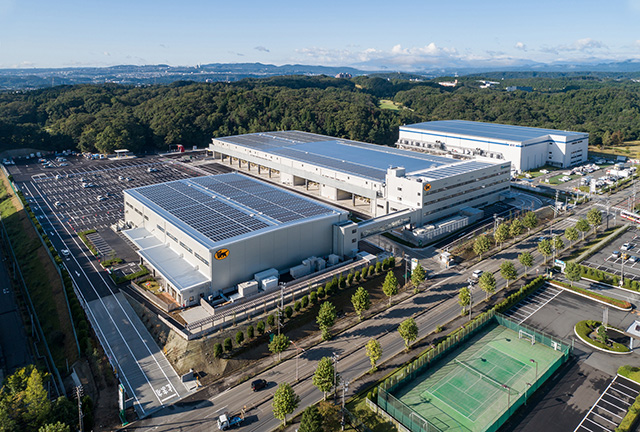
Aerial view of Prologis Patterson Pass in Tracy, CA

Designing for operational performance 

To support expansion at scale, the facility needed to function as a connected operational system, not simply a larger warehouse footprint.

Key systems were planned together to support performance from day one:

  • Racking systems designed to balance storage capacity with accessibility, helping reduce unnecessary movement across the operation
  • Dock and staging layouts aligned to support smoother inbound and outbound flow
  • Electrical infrastructure planned to support fleet electrification and evolving equipment needs
  • Integrated fire protection and safety systems designed to support long-term facility performance

This coordinated approach helped simplify execution while supporting both operational efficiency and compliance requirements. 

A unified operation built for scale 

The company expanded from approximately 150,000 square feet to more than 550,000 square feet within a single location.

By integrating adjacent warehouse suites into one coordinated operation, the company created a more centralized and synchronized environment for storage, staging and distribution activity.

The shift helped:

  • Simplify coordination across the operation
  • Support more efficient movement throughout the facility
  • Reduce fragmentation across the expanding footprint
  • Create infrastructure designed to adapt alongside future growth

What began as a single-suite operation evolved into a connected environment designed to support long-term scalability. 

Quote Icon

Working with Prologis Essentials was a critical component of the expansion. Through early collaboration, the team gained valuable insight into operational flow and the facility’s ability to support growth. That partnership built the confidence to scale from the original footprint to more than 550,000 square feet.

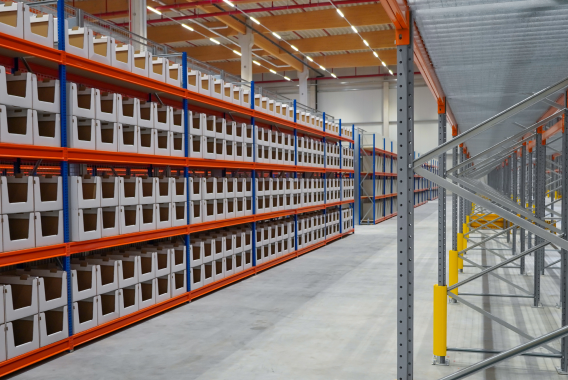
Racking systems in an industrial warehouse ​

The takeaway

As operations grow, complexity often grows with them. By aligning operational planning, infrastructure, permitting and execution early, companies can simplify expansion, reduce friction and build facilities designed for long-term performance.