
From Prologis Research: Global trade policy is in flux, creating real-time challenges for supply chains. In response, Prologis Research is launching a white paper series to anchor the conversation in facts. Drawing on our global data and direct customer feedback, this first paper examines how goods move, where trade friction is hitting hardest and what it means for logistics real estate. Future papers will cover other direct impacts to logistics real estate—specifically, the increase to replacement costs and associated required rent—and implications of trade policy as it solidifies. Our goal: to bring clarity to an evolving landscape and identify where demand may shift next.
Rapid shifts in trade policy and economic conditions underscore the need to assess potential exposure within the U.S. logistics real estate market. Prologis Research continues to find that most logistics real estate demand is insulated from trade-related shocks. As outlined in papers dating back more than a decade, this resilience stems from the concentration of facilities in consumer-oriented markets, which developed to primarily serve domestic consumption and regional distribution, not global trade. Accordingly, changes in trade policy are likely to have only a modest impact on the broader logistics real estate landscape. This paper outlines four key frameworks that help decipher the impact of future trends:
(i) Logistics real estate functions along the supply chain,
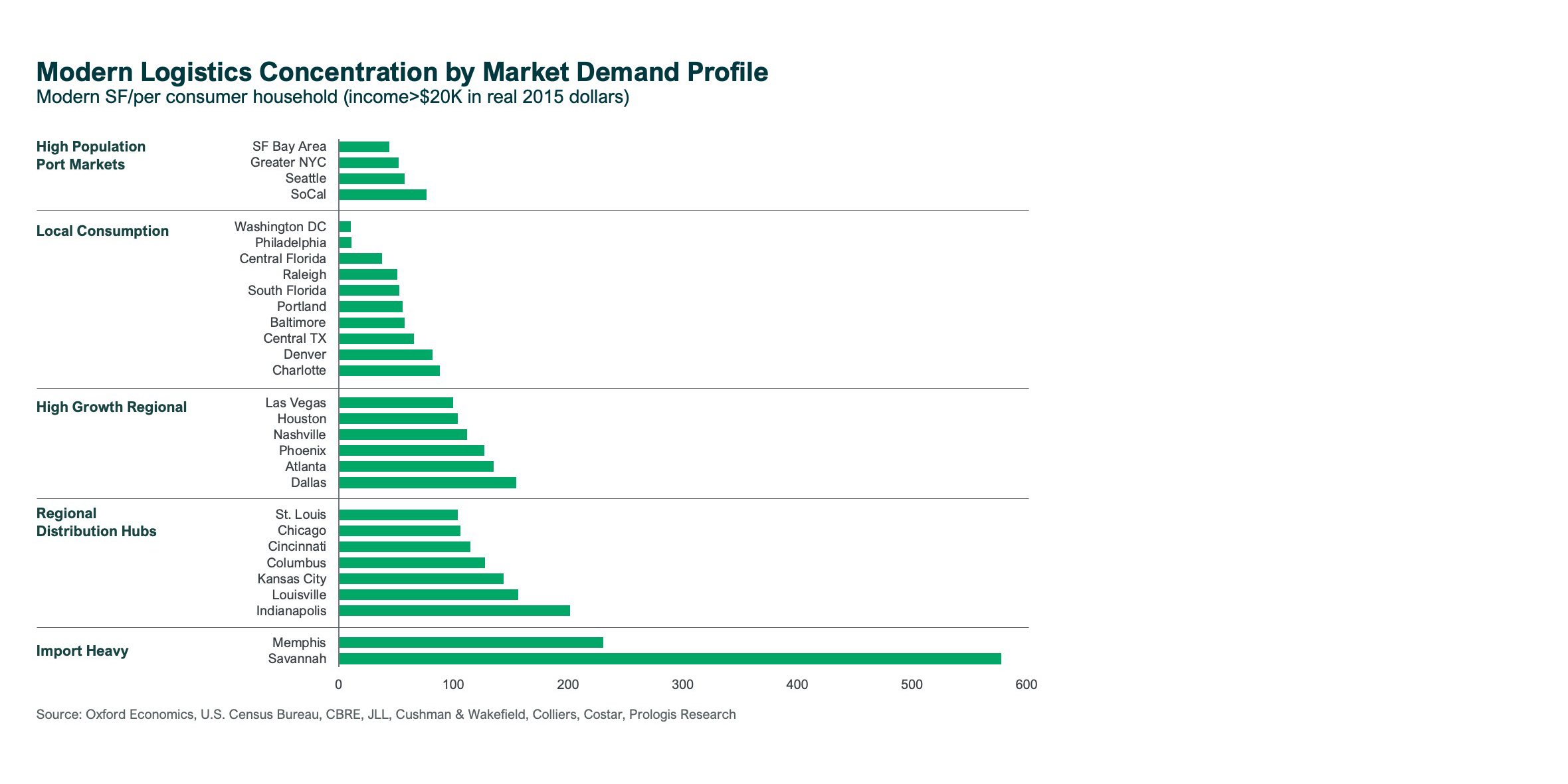
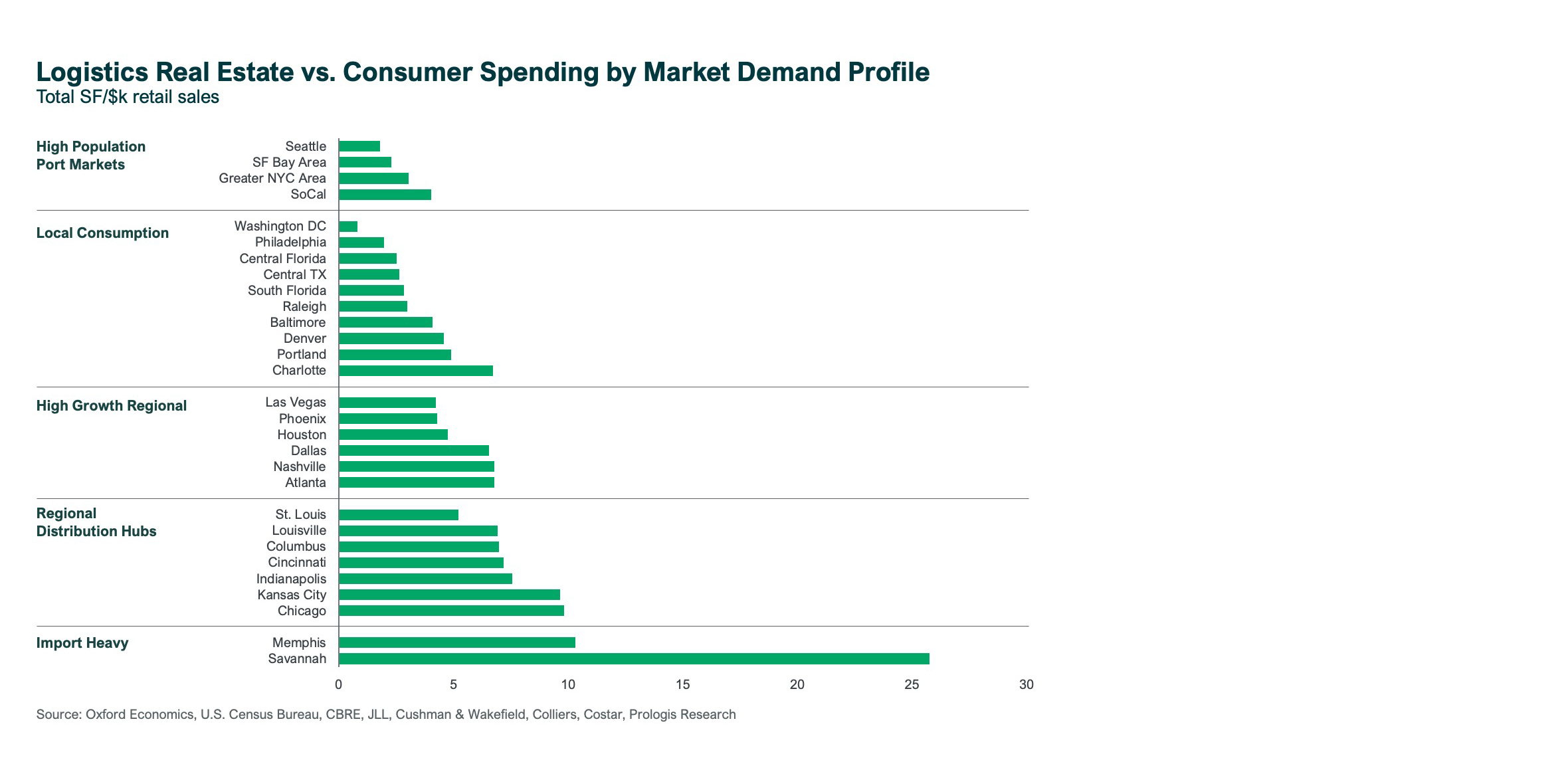
(ii) Market by market trade dependency,
(iii) Import reliance by source of origin for logistics users, and
(iv) Customer feedback.
Key Takeaways:
- Most U.S. logistics demand is insulated from trade shocks. 75% of logistics real estate demand is tied to regional distribution and local consumption compared to a fraction of properties that are trade oriented.i
- Trade-oriented markets are highly concentrated. Real estate in markets like Savannah, Georgia and Memphis, Tennessee, are the most exposed. Port markets like Southern California and New Jersey have exposure, but less than many might expect.
- Import exposure is lower than it appears. Industries weighted by logistics real estate footprints skew toward essentials and domestic sourcing, with limited reliance on China and high price inelasticity.
- Customers are delaying decisions. Uncertainty, not tariffs themselves, is slowing leasing activity and prompting interest in shorter, more flexible terms. Customers report they remain focused on growth initiatives and are moving through analysis stages, preparing to act as clarity emerges.
- Short-term measures are driving demand for flexible solutions. Companies are pursuing overflow space, third party logistics (3PL) assistance and Foreign Trade Zones (FTZ) as stopgap tools to navigate volatility.
- Supply chain diversification, including nearshoring is rising gradually. Mexico and Asia ex-China are gaining U.S. import share,ii but most structural investments remain two to five years out as companies await clearer policy signals.
I) Location Strategy
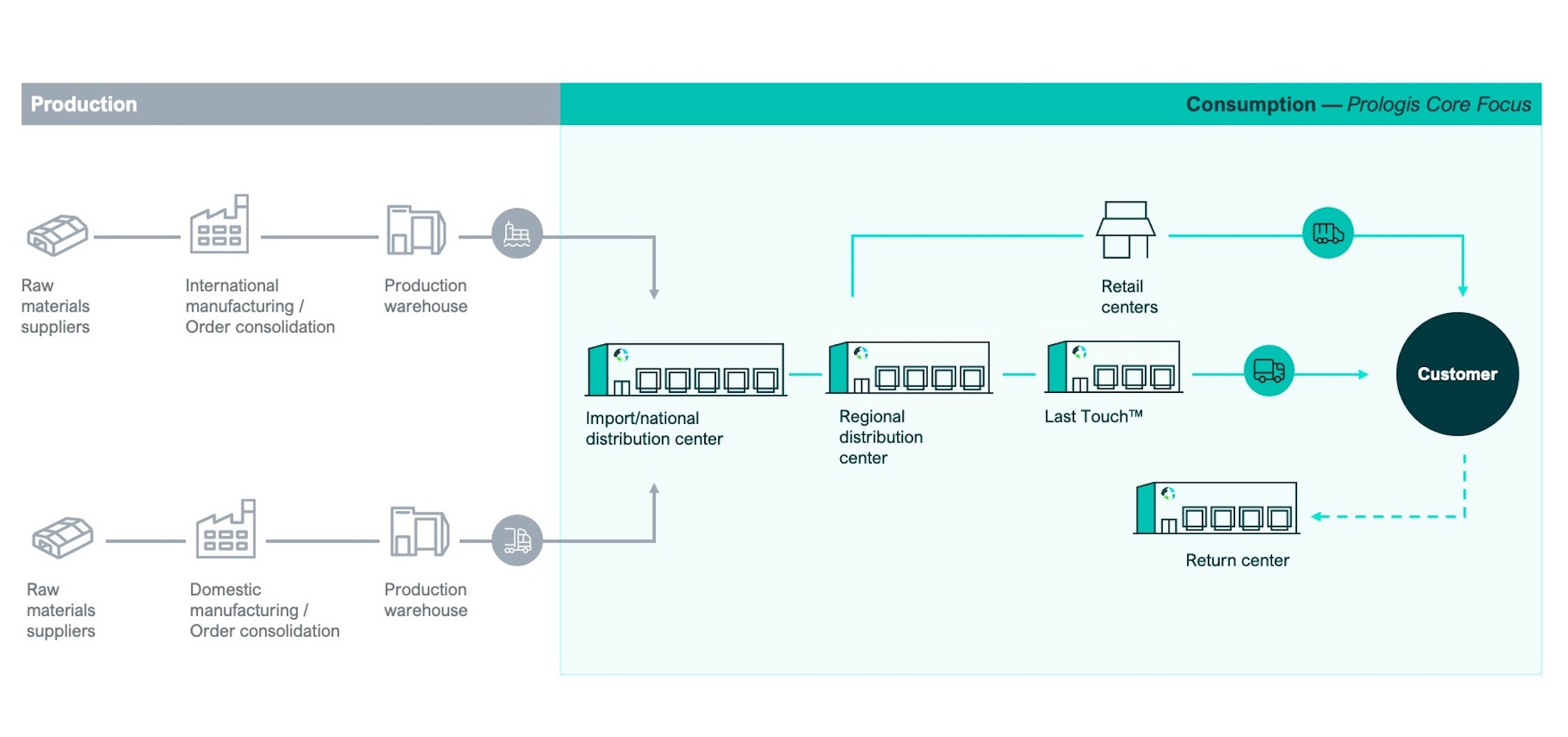
Logistics real estate spans a wide range of supply chain strategies and locations. In the diagram below, goods flow from left to right from where they are produced to where they are ultimately consumed, highlighting which segments are most exposed to disruption.